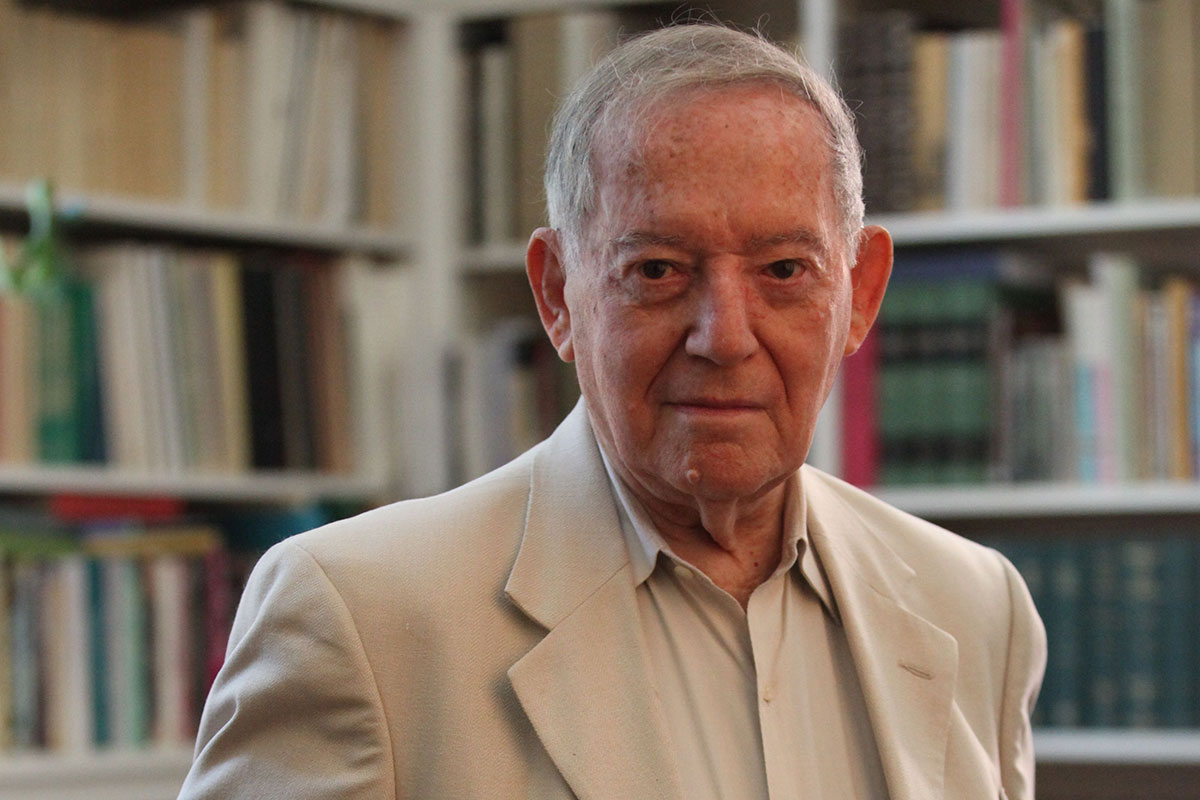
Introduction to the Legacy of Lambros Comitas
Lambros viewed anthropology as a science which in theory explores all facets of human life and interaction through time and space. He was a pragmatist who demonstrated the value of an applied anthropology based on the firm linkage of scientific rigor, insightful methodology, and high ethical standards. Unlike many of his colleagues, he saw no gulf between mainstream and applied anthropology, arguing like his elder, Conrad Arensberg, that they were but two facets of a single endeavor with application providing an essential laboratory for testing the theories and models generated by the academy.
In the 1960s, Teachers College, Columbia University, sought to initiate the discipline of anthropology. Lambros was hired to design the graduate program. With a deep understanding of the evolution and differences in schools of anthropology, he created the Joint Program in Applied Anthropology. Insightfully, he linked it with the Department of Anthropology at Columbia from which the PhD degree would be awarded.
The program model centered on conducting fieldwork early in the student’s graduate education while participating in the First and Second Year Colloquia of combined cohorts. Emphasis was placed on note-taking in field work.
If anthropology has a soul, that soul is the field. But the field is only one of two indispensable components of anthropology. The other is the anthropologist.
Their relationship is the intricate dance between the researcher’s personality and knowledge and the unfamiliar social and cultural forces that initially engulf him. In this dualism, the field is both crucible and molder of anthropologists.
Lambros was a methods man, intrigued by unlocking the appropriate methods and techniques to enter the field in order to investigate the essential research problem. He was the consummate field worker, with an interest in the nature of society and in basic research on real-life issues whose findings could be applied to practical problems. He endorsed anthropology’s unique method of participant observation and adopted Arensberg’s community-study method—with its definition of community as a master institution or master social system, a key to society and a model, perhaps the most important model, of culture.
While contemporary American sociocultural anthropology has many theoretical currents, no one approach dominated the discipline. Lambros was similarly theoretically eclectic. He understood the value of multiple perspectives and the flexibility gained from a lack of a dominant approach, pointing out that the absence of rigid boundaries and definitions offers an area for creative combinations and innovative solutions to theoretical and methodological questions.
Foremost a Caribbeanist, he conducted early research on fishing cooperatives in Barbados and Jamaica, followed by a medical anthropological study of chronic cannabis use in Jamaica with Dr. Vera Rubin. This led to his later work on hashish users in Greece. He is most known for Caribbeana 1900–1965: A Topical Bibliography (1968), later expanded to The Digitized Caribbeana 1900–1975 (2005). From his 1950s field work in Jamaica, he was best known for advancing the concept of occupational multiplicity—as an individual cobbles together a number of work activities to eke out a living. His final work, The Hashish Dialogues, with illustrations by Lily Herlambang, was published posthumously in 2023.
Comitas is admired and remembered for his teaching and mentoring of seemingly countless numbers of graduate students over five decades. During this time he advised well over 100 dissertations. His students form a cohort spanning multiple generations, interests, and backgrounds. Lambros believed that the most rewarding part of anthropology was teaching; and the student was paramount. His special concern was to train students who would choose careers of applied research, even in domains somewhat distant from traditional academic pursuits.

Biography: Early Years, Education & Career
Lambros Comitas was born on September 29, 1927, and raised in New York City in a Greek cultural and linguistic milieu. His parents immigrated to the U.S. from the island of Ithaca, and this image was to resonate throughout his life. He entered Columbia College in the wartime world of 1943 at the age of 16, but was drafted into the US Army in 1946, one semester shy of graduation; however, he did not see service. In 1948, he received his BA from Columbia. Four years later, he married Irene Mousouris, also of Greek descent, who had been a student at Barnard College.
The GI Bill of Rights allowed Lambros to afford graduate studies. In 1962, he received his PhD in Anthropology from the Faculty of Political Sciences at Columbia University, submitting the dissertation Fishermen and Cooperation in Rural Jamaica. Many of his cohorts at Columbia remained lifelong friends, among them Marvin Harris, Morton Fried, Myron Cohen, Mort Klass, and Conrad Arensberg, one of Lambros’s most influential professors.
In 1965, after serving as a Teaching Assistant, Instructor, and Assistant Professor of Anthropology at Columbia University, he was offered a position at Teachers College, the university’s educational arm, located on 120th Street—“the widest street in the world.” There he would cement his 77-year relationship with Morningside Heights.
Comitas’s major contribution was the founding of the Joint Program in Applied Anthropology. He advanced quickly—from Associate Professor (1965–67) to Professor of Anthropology and Education (1967–87) while directing the PhD Program in Anthropology. In 1988, he was promoted to Gardner Cowles Professor of Anthropology and Education.
Turning to administrative work while teaching, Lambros held numerous positions at Teachers College: Associate Director, then Director of the Division of Philosophy, the Social Sciences, and Education; Chairman of the Department of Philosophy and the Social Sciences; and director of the Institute for Latin American and Iberian Studies, Center for Urban Studies and Programs, Center for Education in Latin America, and Institute of International Studies. He was elected President of the Society for Applied Anthropology (1970–71).
In addition to his wide-ranging ethnographic work, Lambros collaborated with Dr. Vera Rubin on multiple research projects, in particular the NIH Cannabis Project. He held positions at The Research Institute for the Study of Man (RISM) in New York City, founded by Dr. Rubin for the study of the Caribbean. In 2003, he founded the Comitas Institute for Anthropological Research (CIFAS). The Institute supports his passion for applied anthropology and, with his passing on March 5, 2020, it will appropriately sustain his anthropological legacy.
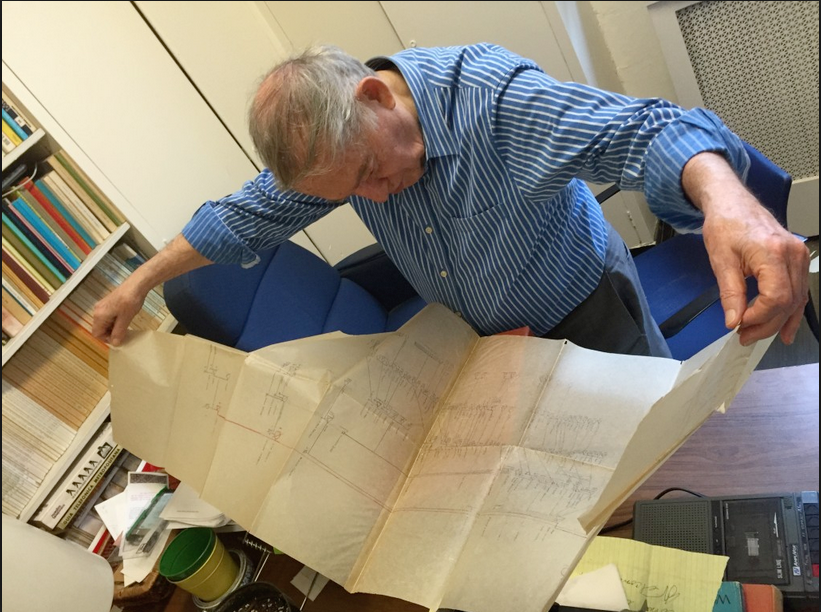
With Ithaca on My Mind: An Anthropologist’s Journey
In 1988, Lambros Comitas was appointed the Gardner Cowles Professor of Anthropology and Education. In his inaugural address to the Teachers College community, he professed that he owed much to a reading of the poem “Ithaca” by Constantine Kavafy, who was widely considered the most distinguished Greek poet of the 20th century. For Comitas, the opening stanzas of the poem were an exhortation to the call of anthropology.
When you set forth for Ithaca,
pray that the journey be long,
full of adventures, full of knowledge.
Lambros then asks rhetorically: What is anthropology but the science of man, with ties to the biological sciences and the humanities—a science which in theory explores all facets of human life through time and space. He waxes poetically, comparing anthropology to a journey—humanistic, creative, all-encompassing. For Lambros, the Greek island of Ithaca, from which his family originated, and the journey of anthropology become one.

The Comitas Phenomenon
The following pages are written as a tribute to one of the most unusual professional careers in the history of anthropology: the career of Prof. Lambros Comitas of Teachers College, Columbia University. Known to his students simply as Lambros, his research, publications, and professional awards have already been documented elsewhere. What is in danger of being overlooked is his extraordinary—arguably unique—productivity in terms of the mentoring of students to a PhD in anthropology.
The database underlying this report is a spreadsheet of the names, years, and dissertation titles of students who successfully completed the PhD under Comitas’ guidance. By coincidence the spreadsheet had exactly 100 students. The final PhD on the list, produced in 2014, was Lambros’ 100th. The number 100 is generally a milestone marker triggering a celebration.
How many anthropology professors have mentored 100 students to the PhD? No data are available. Senior professors may be proud of having produced 20 or 30 PhDs. Lambros Comitas has produced 100; on that criterion, he may possibly belong to a star category with an N of 1.
He started mentoring graduate students in Teachers College Columbia in the early 1960s and reportedly still boarded NYC buses and subways each day to his office in 2017, more than a half century later. Rounding it off, during that half century he produced an average of two PhDs per year. The average length of time from the BA to a PhD in anthropology is a horrendous seven years. This means that at any given time during this half century Lambros was the committee chair for 14 students.
Whether fellow academics react to this situation with admiration or horror—few would envy the associated workload—we are in the presence of a phenomenon, the Comitas phenomenon, that may be unique in the annals of anthropology. Many of us who received our doctorates under him have long since retired; some of our classmates already have been honored with obituaries. Lambros, however, continued his commutes to his TC office.
In terms of the number of PhDs he mentored, the variety of countries and territories in which his students did their research, the direct in-situ guidance which many of them received, the variety of applied research projects in which Lambros himself was involved, and his own professional longevity still in progress, it is a unique saga worthy of empirical documentation.
Read the Full Paper (PDF)