
The Comitas Gallery
Jamaica1 9 5 5 — 1 9 7 9
Scroll
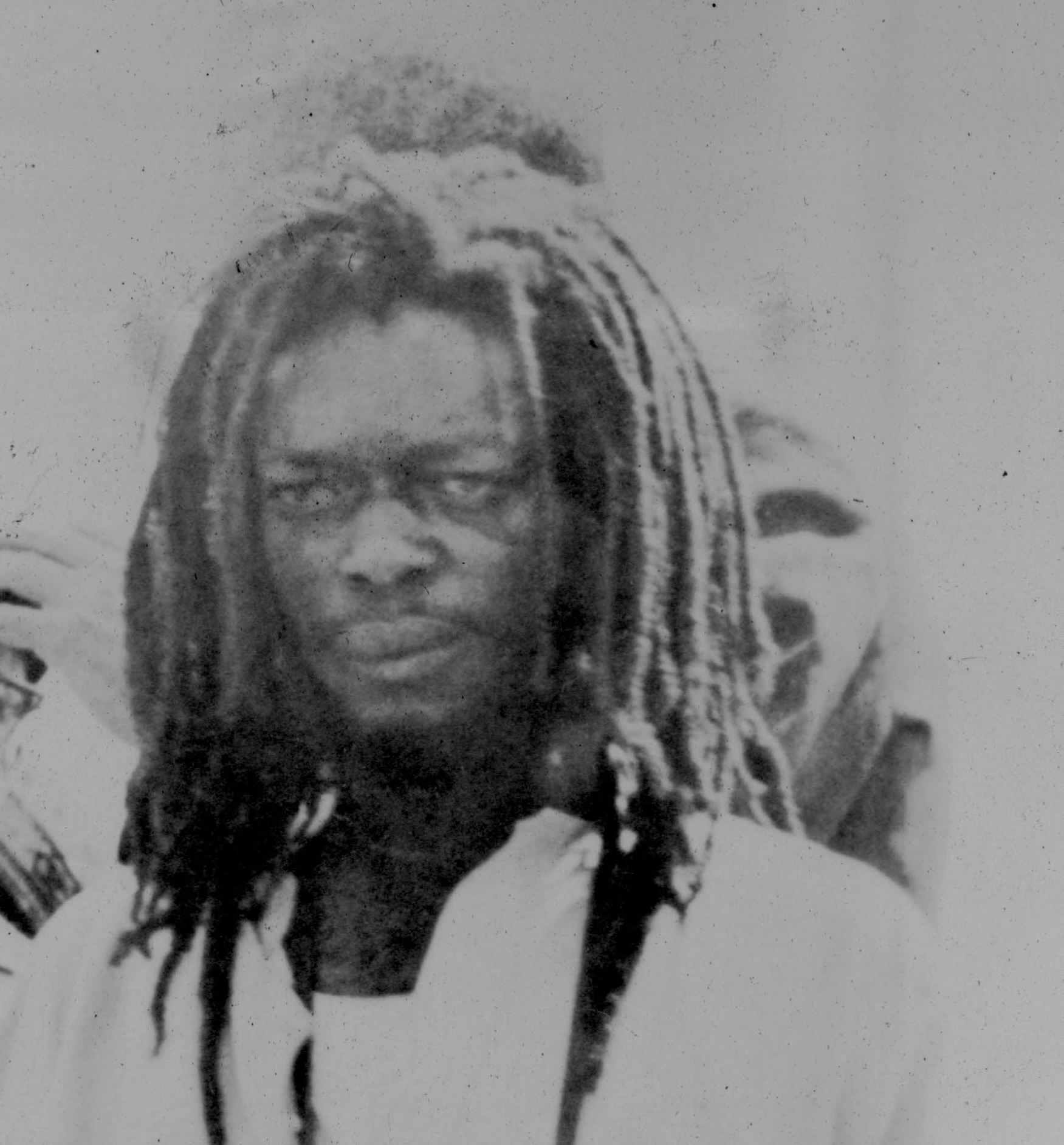 Mortimo Planno
Lambros Comitas's first use of the video camera came in the late summer of 1969, when he was en route to Bolivia to work on a Peace Corps project. In Jamaica, he was checking on a number of his graduate students in the field.
One was Claudia Rogers, who was working in West Kingston at the time.
The year before, Lambros had met Mortimo Planno — a Rastafari leader who had become a folk hero for the role he played in quelling the tumultuous crowds at Palisadoes Airport during Emperor Haile Selassie I's state visit in April of 1966.
With Rogers' assistance, Comitas found Planno in his yard on Fifth Street in Trench Town.
“I well remember that day in 1969, we talked about race relations and civil rights, the Rastafari settlements spreading outside of Kingston, his [Planno’s] stay in the United States and of a consequential televised debate he had with Malcolm X. We even talked about 35mm cameras and the newfangled videotape machine I was taking to Bolivia.”
Lambros Comitas — Field NotesThree years earlier, Planno had personally intervened when overwhelming crowds gathered at Palisadoes Airport upon the arrival of Emperor Haile Selassie I. He disembarked the Emperor from his plane — an act that cemented his status among the Rastafari faithful.
He was a member of the Ethiopian World Federation Local 37 and had participated in the historic government-sponsored Mission to Africa in 1961. During the mission’s visit to Ethiopia, Planno and two other Rastafari met with Emperor Haile Selassie I.
As their visit wound down, Planno offered to organize a gathering for Lambros to videotape at the Dungle — a legendary Rastafari meeting place off Salt Lane in West Kingston that housed the Ethiopian World Federation Local 37.
Comitas thought this would be an opportunity to capture something of Rastafari spiritual practice "for posterity."
On August 5, 1969, Comitas recorded two "Rastafari happenings" that he called Rastafari Rites and An Amharic Language Lesson. Both would compare favorably with the 'sequence films' produced by ethnographic filmmakers like John Marshall and Timothy Asch.
The photographs that follow document the preparation and lighting of the chalice — a communal ritual at the heart of Rastafari spiritual practice.
The Dungle, Kingston, Jamaica — August 5, 1969
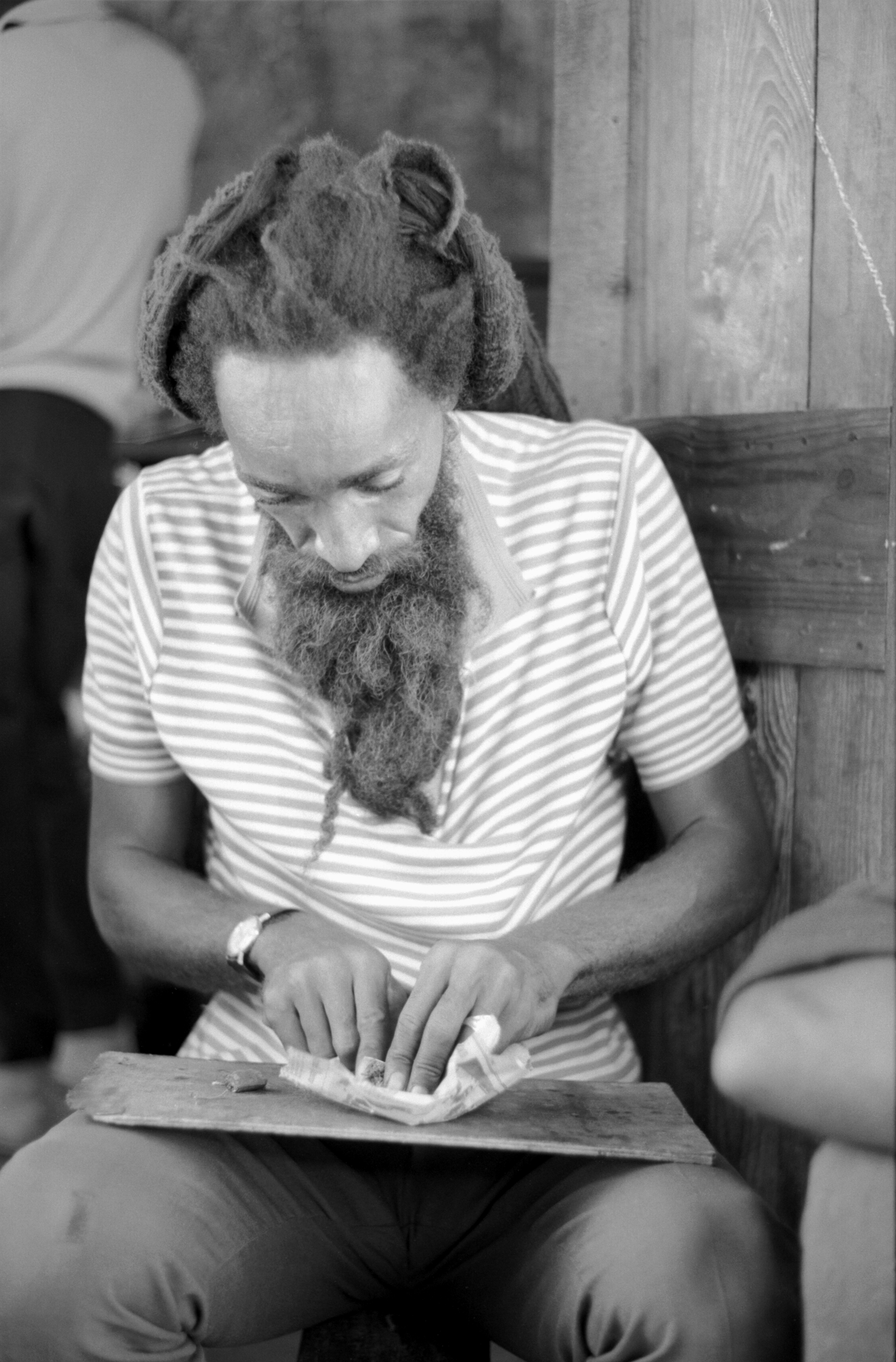
A Rastafari brother carefully prepares the sacramental herb on a suru board — the wooden surface used for ritual cutting and blending before it is placed in the cutchie or ‘cup’ of chalice.
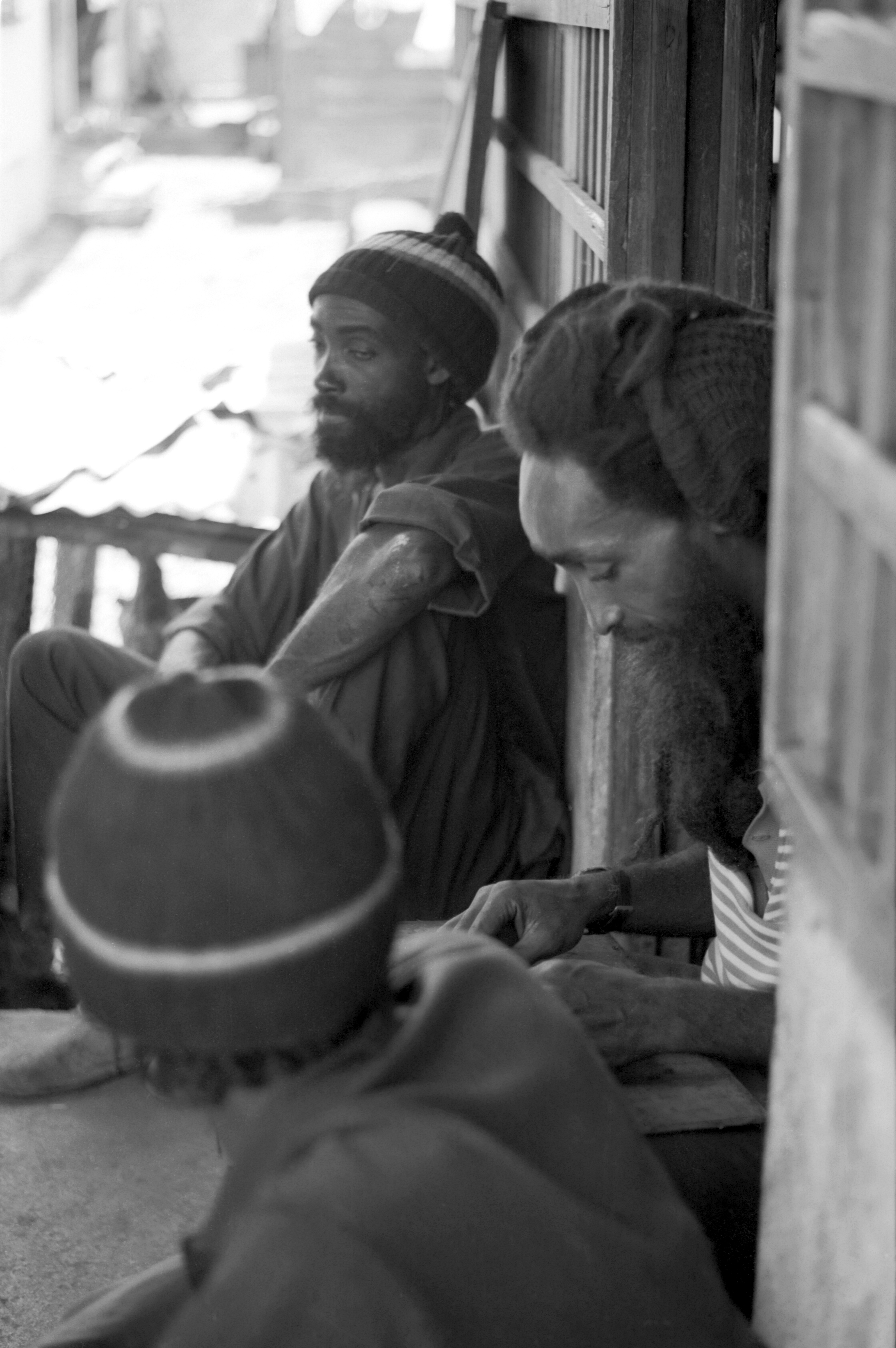
The herb is methodically prepared — a deliberate, meditative act that traditionally concludes with a ‘blessing’ (prayer) prior to the lighting and smoking of the communal chalice. Each step carries spiritual significance.
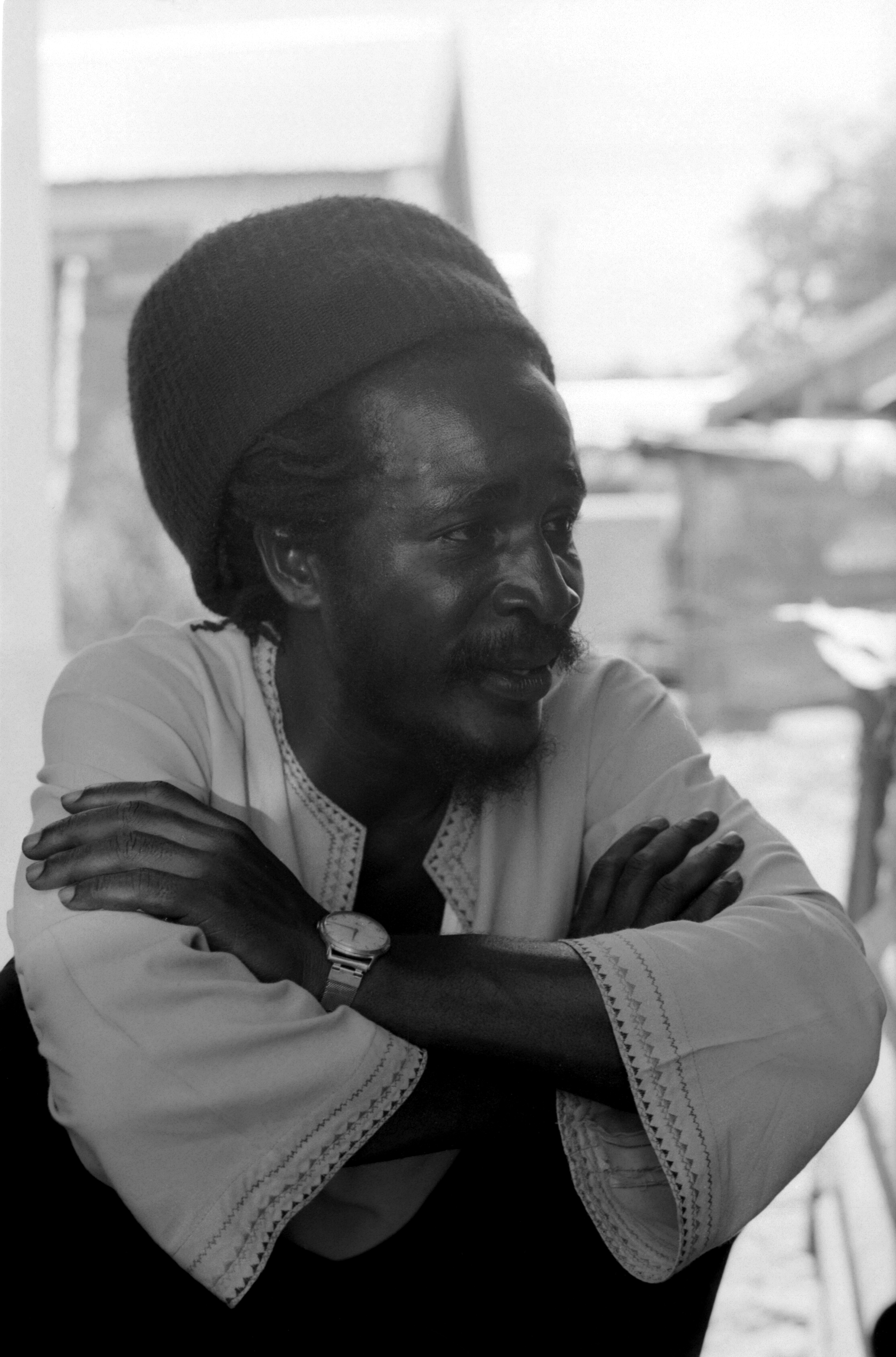
Brother Morgan, one of Planno's close associates and a participant in the Amharic Language Lesson that Comitas would also record that day.

As Brother Morgan draws the chalice, one of his brethren applies flame to the packed communion cup (cutchie), initiating the smoking of the sacred herb.
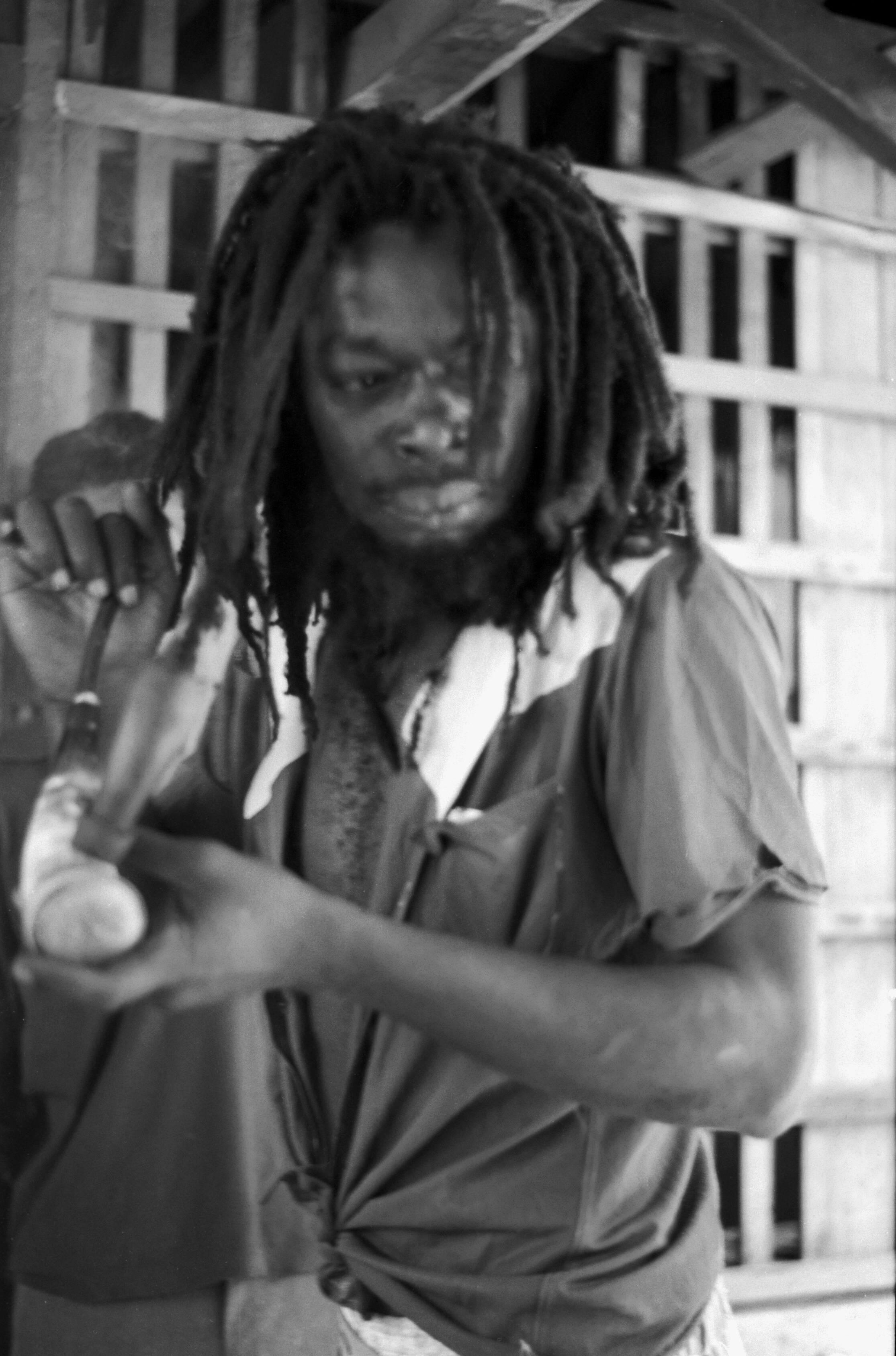
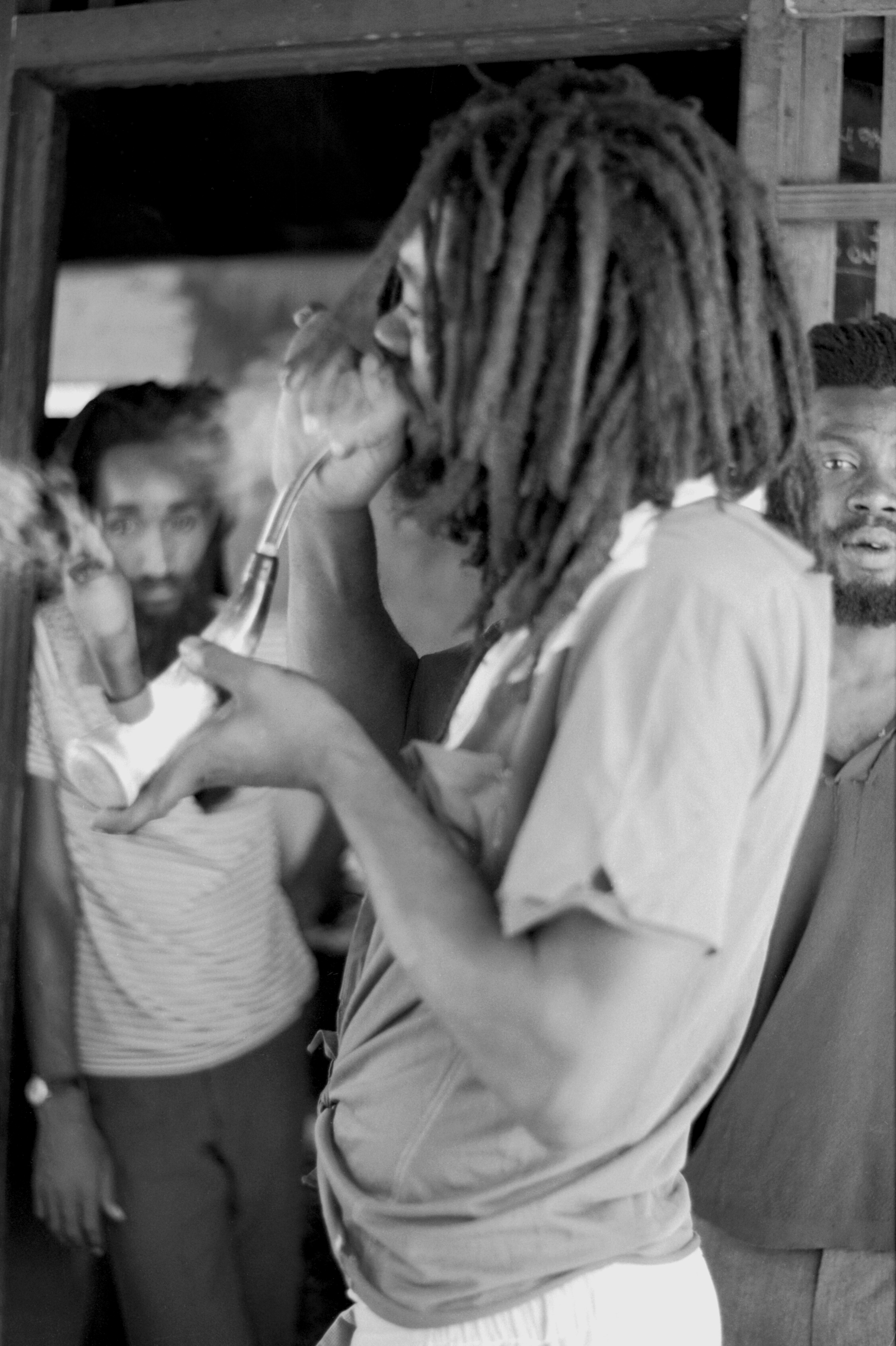

Mortimo Planno receives the chalice and prepares to bless it; he draws from it several times; and releases a voluminous cloud of smoke before passing it on… the central act of communion within Rastafari practice.
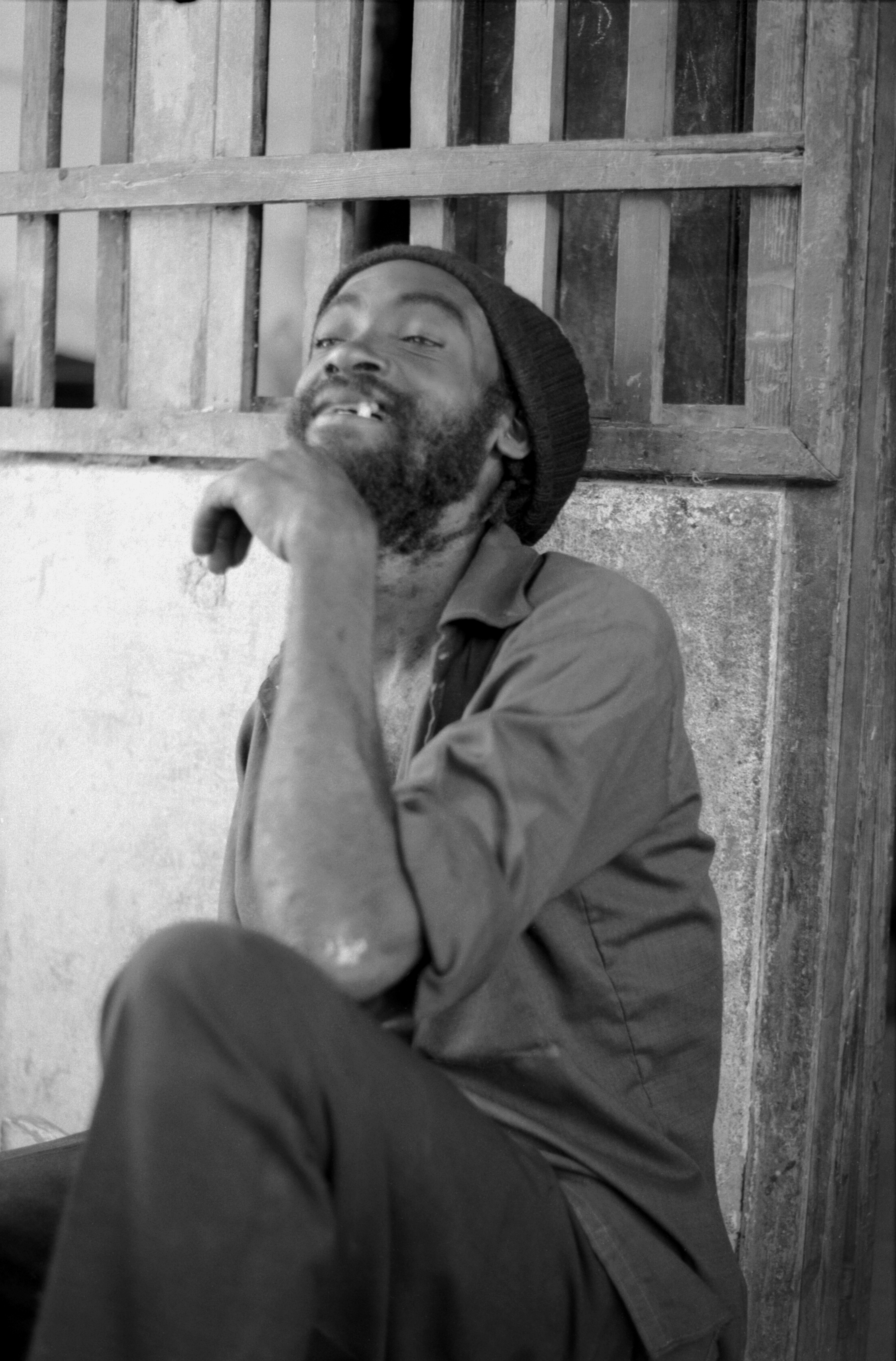
An unidentified member of the gathering watches and affirms the proceedings. Comitas's lens captures not only the central actors but the wider circle whose presence constitutes the communal nature of the rite.
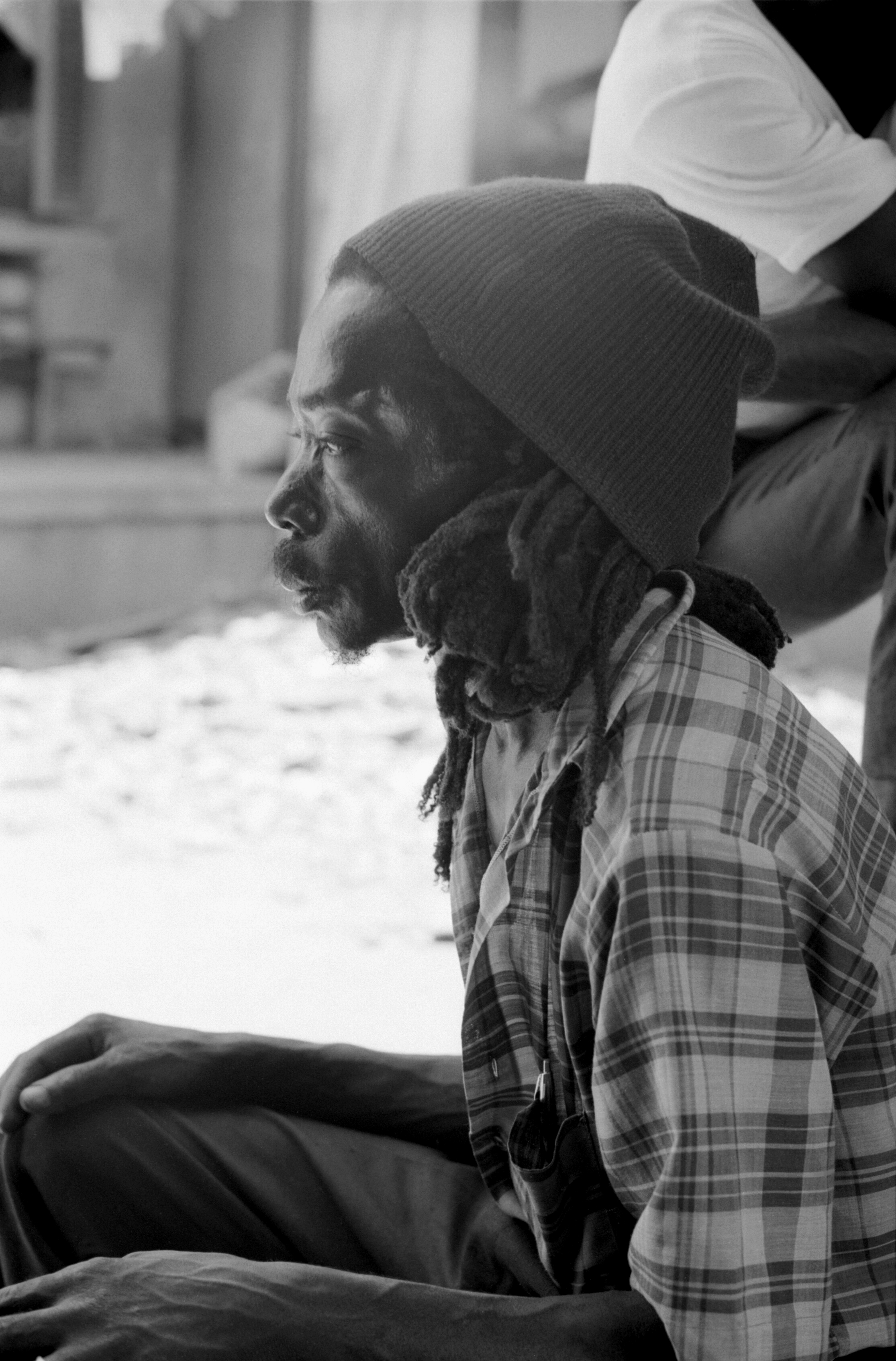
Another member of the community observes from the periphery. In the background, the textures of the Dungle itself — the wooden structures and narrow passages of this legendary gathering place.
 Coastal Communities · Jamaica 1
 Coastal Communities · Jamaica 2
Comitas's Jamaican fieldwork extended well beyond Kingston. From the 1950s through the 1970s, his research encompassed fishing communities, religious congregations, and rural life across the island.
On August 4, 1969 — the day before filming the Rastafari rites — Comitas recorded services at St. Peter's Pentecostal Church in Llandewey, led by Pastor Williams. The juxtaposition reveals the range of spiritual expression across Jamaican communities.
A decade later, in December 1979, Comitas returned to St. Thomas to interview members of the Ethiopian Zion Coptic Church at White Horses — documenting the continuing evolution of syncretic religious movements in rural Jamaica.
From his earliest work in the 1950s, Comitas studied the fishing cooperatives and coastal communities that defined much of Jamaica's rural economy. His lens captured life at Rocky Point, White House, Negril, Duncans, and Lances Bay — communities now facing climate change, rising seas, and tourism-driven development.