Board of Directors
Professionals and academics whose careers were inspired by the teaching and mentoring of Professor Lambros Comitas.
The Board


Past Board Members
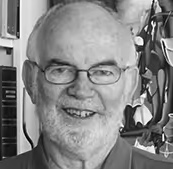
Melanie Creagan Dreher was a practicing nurse when she entered the first class in Applied Anthropology at Teachers College in 1967, never having taken a course in Anthropology. Two years later, with the encouragement of Professor Comitas, she joined the NIH Cannabis Project in Jamaica where she explored the impact of ganja on work performance, challenging the commonly accepted amotivational syndrome. This research was the foundation for her dissertation and first book, Working Men and Ganja (1984), initiating four decades of scholarship on the social and health aspects of cannabis.
Dr. Dreher officially began her academic career as Assistant Professor at Columbia University School of Public Health where, with NIH post-doctoral funding, she shifted her attention to the consumption of cannabis tea by Jamaican school children and cannabis consumption during pregnancy on neonatal health and development. In 1984, she was appointed to the Endowed Chair in Transcultural Nursing at the University of Miami where she continued her examination of children exposed to cannabis prenatally. Within two years she became Dean of the School, opening the door to subsequent deanships at University of Massachusetts-Amherst, University of Iowa, and eventually, Rush University in Chicago.
As an academic leader, she championed the inclusion of anthropological methods and real-world evidence in health practice, education, and research. Throughout her career, she has continued to conduct, present, and defend the results of her ethnographic research on cannabis both for the academy and for the public. While Dean at University of Iowa, she hosted the first International Clinical Conference on the Therapeutic Use of Cannabis. She also served as an expert witness for several cannabis-related court cases and as a speaker for community organizations.
For her sustained commitment to seeking and telling the truth about marijuana, she received the Lester Grinspoon Award from the National Organization for the Reform of Marijuana Laws (NORML). The application of her research on the use of cannabis during pregnancy has successfully averted both the postpartum imprisonment of mothers who used cannabis during pregnancy and the placement of their newborns in foster care. Dr. Dreher received a special citation from the U.S. Ambassador to Jamaica for her humanitarian work in Jamaica.
Dr. Tony Barclay received a PhD at Columbia in 1977, in the early years of the Applied Anthropology program at Teachers College that was founded and led by Professor Lambros Comitas. As Tony’s advisor during coursework at Columbia, field research in Kenya, and the writing of his dissertation, Lambros was an engaged, influential mentor and role model.Having served as a Peace Corps Volunteer teacher in Kenya, Tony returned there for his Ph.D. research on the socio-economic impact of a large-scale sugar project in a previously neglected area of western Kenya. This experience led him to pursue a career as a development practitioner, rather than an academic. This career choice was one that Lambros understood and encouraged, because it fit the philosophy of the Applied Anthropology Program.
Tony joined the staff of Development Alternatives, Inc (DAI), an employee-owned international development consulting firm, in the fall of 1977. After two years as a social scientist on multidisciplinary project teams in Africa, his role evolved into leading the firm’s transformation from a boutique with a handful of American professional staff into a company with global reach, a multinational staff, and a reputation for innovation and excellence in project management. When he retired as CEO in 1999, DAI had annual revenues of $375 million and 2,500 employees working in more than 50 countries.
After DAI, Tony was a core faculty member for a decade in several Master’s degree programs that train promising young development practitioners. At Georgetown University’s School of Foreign Service, SIPA (Columbia) and the University of California at Berkeley, he tried to follow the path in teaching and interacting with students that was charted by Lambros Comitas. Today, in addition to his involvement with CIFAS, Tony chairs the US Board of Trustees of the Lewa Wildlife Conservancy, an organization in northern Kenya that has earned a global reputation for community-centric conservation. He also serves on the board of the Peace Corps Commemorative Foundation and the Kenya Scholar Access Program (KenSAP).
Renzo Taddei is the Director of the CIFAS Field School in Ethnographic Methods. Under Lambros Comitas’s supervision, he earned his Ph.D. in Anthropology from Columbia University in 2005, with a dissertation on the traditional environmental knowledge about the atmosphere and weather of peasants in rural Northeast Brazil and its tense relationship with scientific meteorology, on the one hand, and local politics, on the other. The doctoral dissertation was nominated for the Bancroft Prize at Columbia University. With Comitas, he created the CIFAS Summer School in Ethnographic Methods in 2003.
He has done fieldwork in Brazil, Uruguay, and the U.S. on topics related to the interface between scientific and traditional and Indigenous environmental knowledge. Previously, he worked in Argentina on youth violence and soccer fandom.
Dr. Taddei has been a visiting professor at Yale University, Duke University, and the University of the Republic in Uruguay. Currently, he is a tenured professor at the Federal University of Sao Paulo, Brazil, where he teaches anthropology and science and technology studies. Between 2005 and 2014, he was a research associate and later principal investigator at the Center for Research on Environmental Decisions (CRED) at Columbia University. From 2020 to 2024, he has served on one of the standing committees of the World Meteorological Organization. He is currently one of the lead authors of the upcoming report from the UN Intergovernmental Panel on Climate Change (IPCC).
Renzo was born and raised in Sao Paulo, Brazil. Before becoming an anthropologist, he received a B.Sc. degree in Industrial Engineering (1995) and a Master’s degree in Education (2000) from the University of Sao Paulo. He also had a short experience as a professional photographer between 1998 and 2000.
In 2017, he published Meteorologists and Rain Prophets: Knowledge, Practices, and Politics of the Atmosphere (Terceiro Nome publishers, in Portuguese). He co-organized two books: After the Rains Didn’t Come (2010, published by Funceme and CIFAS) and The Anthropocene: On Modes of Composing Worlds (2022, Fino Traço publishers), both in Portuguese. His work has appeared in journals such as American Anthropologist, Nature Climate Change, Weather Climate and Society, Climatic Change, Climate Services, Environmental Science and Policy, Energy Research and Social Science, Latin American Research Review, and Social Semiotics.
Dr. Jake Homiak received his PhD from Brandeis University in 1985, following anthropological fieldwork in Jamaica (1980-81) on the Rastafari movement. Lambros Comitas was a member of his dissertation committee. That same year, he was awarded a post-doctoral Fellowship in the Department of Anthropology, National Museum of Natural History (NMNH) at the Smithsonian Institution.
In 1989, Jake was appointed Director of the Human Studies Film Archives (HSFA) and became an active participant in the Society for Visual Anthropology. In 1993, he became the Director of the National Anthropological Archives (NAA), the successor archives to the Bureau of American Ethnology. There he launched a program for digitization of archival materials and developed a collaborative relationship with the Wenner-Gren Foundation’s Historical Archives Program to assist the NAA in acquiring and processing the scholarly papers of distinguished American anthropologists. From 2000 to 2015, he served as Director of the Anthropology Collections and Archives Program.
In his years at the Smithsonian, he supported acquisition of collections by external scholars, collaborative relationships with native and Indigenous source communities from North America and beyond, and processing the loan of artifacts to national and international institutions. He worked on the development of the Department’s Summer Institute in Museum Anthropology (SIMA, 2009) and the Smithsonian’s ‘Recovering Voices’ Program (2008)—an initiative that draws upon NAA language materials to support endangered language programs among native and Indigenous communities. In 2008, Jake was awarded the Jagiellonian Silver Medal for his role in the return of the Records of the Institut fur Deutsche Ostarbeit to the Jagiellonian University in Krakow, Poland.
Jake has maintained a close relationship with the Rastafari community in Jamaica, the Anglophone Caribbean, and metropoles of the U.S. (Baltimore, Washington, D.C., New York, Los Angeles). He has been involved with the movement’s politics of representation since the mid-1980s by organizing and assisting delegations of Rastafari Elders to travel to the U.S. and participate in a series of public forums about the actual nature of their culture and practices. He has also been involved with curating and advising museum exhibits: the Anacostia Museum’s exhibit “Black Mosaic: Community, Race and Ethnicity among Black Immigrants in Washington, D.C.” (1994); the NMNH exhibit “Discovering Rastafari” (2007-2011). His writings and publications include the forthcoming book, Enter the Lion: The State Visit of Emperor Haile Selassie I to the Caribbean, 1966 (with co-authors Giulia Bonacci and Jahlani Niaah).
Jake retired from the Smithsonian in March of 2018, but remains involved as a Research Associate in the Department of Anthropology. One of his last official acts as Director of the National Anthropological Archives was to set in motion the acquisition of field research, papers and correspondence of Dr. Lambros Comitas for that repository.
Environmental anthropologist and Professor at the University of Miami, Dr. Kenny Broad, has participated in extreme scientific and filmmaking expeditions on every continent to gather information and samples that shed light on little known environmental and cultural subjects.
Kenny was born in 1966 in Los Angeles, California, but moved to Miami, Florida shortly after where he lived until graduating high school. There he developed an affinity to warm salty water, the people that relied on its resources, and the creatures that lived beneath the surface. He received his B.A. in literature in 1989 from the University of California at Santa Barbara’s College of Creative Studies. He then worked as a professional diver for scientific and film projects around the world. These experiences observing the range of human-environment interactions led him back to school at the University of Miami (UM) where he received an M.A. in Marine Affairs and Policy. His mentor, Dr. Sarah Meltzoff, a Columbia Anthropology graduate, introduced him to Professor Comitas. Professor Comitas convinced him that anthropology was the way to combine his interests.
Kenny’s first ethnographic experience was led by Dr. Melanie Dreher, studying the social impacts of the proliferation of crack cocaine on an urban shantytown in Jamaica. For his PhD under Prof. Comitas’s supervision, Broad studied the climate impacts on fisheries in Peru and Chile, graduating in 1999. Broad subsequently published many papers on the use and misuse of climate information in different parts of the world in high impact journals, including Nature, Science, and Climatic Change. He also served on NOAA’s Climate and Global Change Advisory Board for several years. He collaborated closely with CIFAS’s Dr. Renzo Taddei on multiple projects in Brazil as well.
Broad was a post doc, then research scientist at Columbia until 2001, when he took a faculty position at the University of Miami. Kenny has remained active in cave exploration and was recently featured in the October 2023 special issue on Space in the National Geographic Magazine; and along with the late Wes Skiles, received the Rolex National Geographic Explorer of the Year award in 2011.
Kenny is a licensed US Coast Guard Captain, a commercial helicopter pilot, and holds multiple diving ratings. He currently is Director of UM’s Abess Center for Ecosystem Science and Policy. He is also Co-Director of the Center for Research on Environmental Decisions at Columbia University. Broad was a National Geographic 2006 Emerging Explorer and was elected a Fellow National of the Explorers Club in 2009.
From reading the works of Aimé Césaire, a Martinican poet, as an undergraduate at Vassar College to setting off papier-mâché volcanoes in a park with her third-grade students at a private school in Brooklyn, NY, Ellen has been interested in the Caribbean. Unsure how to approach the study of the region — through history, literature, anthropology, or linguistics — she met Dr. Lambros Comitas at Teachers College in 1979. Not only did he encourage her to choose the field of anthropology, as it cast a wide net, but he became her teacher, mentor, and dissertation advisor in the Applied Anthropology Program at TC/Columbia, from which she received her Ph.D. in 1990.
Dr. Schnepel’s early research focused on Creole languages and cultures in the French Caribbean (Guadeloupe, Martinique, Haiti), exploring the relationship between language and politics. Her post-doctoral research in the Franco-Creolophone Indian Ocean (Mauritius, Réunion) has examined language and gender, ethnicity, the politics of identity, and the Indian diaspora. She co-edited a special issue of The International Journal of the Sociology of Language, dedicated to “Creole Movements in the Francophone Orbit” (1993), and published the monograph, In Search of a National Identity: Creole and Politics in Guadeloupe (Hamburg: Buske Verlag/University of Wisconsin Press, 2004).
When a tenure-track, academic position eluded her, she founded Schnepel Consulting and conducts contract work for public and private institutions and non-profits, such as the National Park Service, City University of New York, and social service organizations. Projects have spanned a range of fields — adult literacy, urban partnerships, community college and minority education, immigration, public health, and youth development, as well as project design and evaluation.
In 2000, Ellen won the chocolate Easter bunny raffle at Aldo’s, a café in Greenport on Long Island. It was an epiphany, changing the course of her career by introducing her to the world of chocolate — its complex history, popular culture, and bean-to-bar processing. She is currently preparing a book on the anthropology of French chocolate, tracing cacao/chocolate as a commodity as it travels from the Antilles to the Metropole and onto France's former colonies.
When not conducting field research or writing, she gives educational presentations and chocolate tastings. She is also mining her anthropological field notes to write creative-nonfiction stories which incorporate Creole dialogue. More information about her work and interests can be found at www.ellenschnepel.com.
Kiran C. Jayaram is an Associate Professor of Anthropology (University of South Florida) and Fellow of the Society for Applied Anthropology. Previously, he held a faculty position at the City University of New York and a postdoctoral fellowship at the Université d’Etat d’Haïti. His research focuses on the anthropology of higher education, political economy, and mobility with geographical focus on South Asia (India), the Caribbean (Haiti, Dominican Republic, Cuba), and the US. From his first major anthropological research project on Haitian laborers and university students in the Dominican Republic, he published several articles, book chapters, and Keywords of Mobility: Critical Engagements (2016, co-edited with Noel Salazar). For his second major research project, the cultural dynamics of anthropological training globally, he has presented several papers and published in Indian Anthropologist (2025).
Within Area Studies, he co-founded the Transnational Hispaniola Collective (2010), a group of scholars, artists, and practitioners whose work involves countering narratives inherent in scholarship, creative works, and policy about the islands’ populations. To date, the Collective has several publications, including Transnational Hispaniola: New Directions in Haitian and Dominican Studies (2018). His work has been supported by the National Science Foundation, the Wenner-Gren Foundation, IIE/Fulbright, the American Jewish World Service, and the World Bank. He has taught the introductory of Cultural Anthropology at a community college, an HBCU, and at the University of South Florida. Other regular courses include an undergraduate Applied Anthropology course and graduate courses (Global Migration and Mobility; Anthropological Theory Today). Before CIFAS, he held executive positions with the Haiti-Dominican Republic Section (LASA), the Society for Latin American and Caribbean Anthropology (AAA), and the Society for Applied Anthropology.
Amina Tawasil is an anthropologist interested in ethnographic and theoretical framings of anonymity, slow labor, and affect. She has been serving as a faculty lecturer in the Programs in Anthropology at Columbia University's Teachers College since 2017. She has published several articles from her fieldwork in the Islamic Republic of Iran on seminarian women, and has recently published a book entitled, Paths Made by Walking: The Work of Howzevi Women in Iran through Indiana University Press. Previously, she taught at the International Studies Institute, the University of New Mexico after serving as the inaugural Andrew W. Mellon postdoctoral fellow in the Middle East and North African Studies program, with courtesy appointment in the Department of Anthropology at Northwestern University. She teaches graduate level courses on ethnographic methods, globalization, dynamics of family interaction, and urban situations.
She is currently completing her fourth year of ethnographic fieldwork among graffiti writers in New York City, Philadelphia and urban New Jersey, which she has published a chapter on in the Ethnography of Reading at Thirty edited volume.
Jennifer R. Wies, PhD, is a cultural and applied anthropologist whose work focuses on gender-based violence, incarceration, HIV/AIDS, and the experiences of college learners. She is Associate Provost and Professor of Anthropology at Eastern Kentucky University, where she has spent more than twenty years advancing teaching, research, and academic leadership.
Jennifer is the author and editor of numerous scholarly publications and received the American Anthropological Association's Gender Equity Award in recognition of her contributions to advancing equity within the discipline. Her commitment to applied and public anthropology is reflected in a career that bridges research, education, and institutional leadership.
An active leader in the anthropological community, Jennifer has served as President of the Association for Feminist Anthropology and as Treasurer and President of the Society for Applied Anthropology. Through her scholarship, service, and leadership, she is dedicated to promoting anthropology's role in addressing complex social challenges and advancing social justice.
Dr. Keri Vacanti Brondo holds the Lambros Comitas Chair in Applied Anthropology and is a Professor at Teachers College, Columbia University, where she is affiliated with the programs in Anthropology within the Department of International & Transcultural Studies. She earned her PhD in Anthropology from Michigan State University, with concentrations in Culture, Resources, and Power and Latin American and Caribbean Studies, and a specialization in International Development. She brings nearly 30 years of leadership experience within the American Anthropological Association and the Society for Applied Anthropology and within their sections, serving on executive leadership, chairing committees and spearheading several association-wide projects; she is the current President-Elect for the Society for Applied Anthropology (SfAA).
Keri’s research and teaching focus on environmental anthropology, critical development studies, conservation, extraction, environmental education, and applied and engaged anthropology, with particular emphasis on the Honduran Caribbean coast. Much of her work has examined the relationships among people, environments, development, conservation, and Indigenous and local communities. Her research in Honduras has included work with Garifuna communities and on land rights, conservation, tourism, and environmental education.
A former Fulbright Scholar, National Geographic Explorer, and recipient of several distinguished awards including the American Anthropological Association’s Presidential Award and the Sierra Club’s Dick Mochow Environmental Justice Award (2017), and she has published 5 books and over 80 articles, chapters, and reviews. Her first book, Land Grab: Green Neoliberalism, Gender, and Garifuna Resistance (U Arizona Press, 2013) is an ethnographic account of the relationship between identity politics, neoliberal development policy, gendered activism, and territorial rights in Garifuna communities on the north coast of Honduras. Her award-winning monograph Voluntourism and Multispecies Collaboration; Life, Death, and Conservation in the Mesoamerican Barrier Reef, (U Arizona Press, 2021), is an ethnographic exploration of the world of conservation voluntourism and its engagement with marine and terrestrial biodiversity on the Honduran Bay Island of Utila. She has also produced four textbooks, including Cultural Anthropology: Contemporary, Public, and Critical Readings (Oxford U Press, 2017; 2022), Anthropological Theory for the 21st Century: Thinking with the Canon (U Toronto Press, 2022), a co-edited (w/ L. Bolles, R. Gomberg-Muñoz, and B. Perley), and Culture, Nature, and Sustainability: An Anthropological Introduction, a comprehensive, problem-centered, inclusive, intersectional, and future-oriented overview of the field of environmental anthropology (Wiley Press. 2025).
Prior to joining Teachers College, she served as the Director of International Studies, Chair of Anthropology, and Associate Dean of Arts and Sciences at the University of Memphis. As the Lambros Comitas Chair at Teachers College, Keri continues the tradition of applied and engaged anthropology associated with Professor Comitas. Her work in ethnographic methods, environmental anthropology, and public engagement brings a strong connection between scholarship, teaching, and the practical application of anthropology to CIFAS.
William Hardy Heaney was an anthropologist, fisherman, and photographer, who passed away much too early, on November 25, 2020, after a four-month battle with COVID-19. Born in Washington, DC, on April 10, 1945, Bill grew up in Oshkosh, Wisconsin. Even with a life spent in motion — for he would later settle with his family in Ridgewood, NJ; Big Timber, Montana; and Waimea, Hawai’i — his mind was never far from the Wisconsin of his childhood where his family co-owned with the Schwalm family the daily local newspaper, The Oshkosh Northwestern, until 1998.
Bill’s travels began early. He graduated from the Hotchkiss School in Lakeville, Connecticut, in 1963. Following a year at the Leys School in Cambridge, England, he continued his studies at Amherst College. He earned a PhD in Anthropology (1977?) from Columbia University’s Teacher’s College, under the guidance of Professor Lambros Comitas. Fieldwork for his dissertation took him to the Pacific to research migration, economic opportunity, and clan life in the Wahgi Valley of newly independent Papua New Guinea. When one of his Omngar hosts was killed in a road accident, Bill assisted in the rescue of his minman, his soul, so that it would not wander aimlessly.
In 1981, after teaching at the University of Papua New Guinea in Port Moresby, Bill returned to the United States and lived in New York where he worked in finance and joined the Anglers’ Club. After earning an MBA from Yale University’s School of Management, he worked in non-profit management, administrating Columbia’s Lamont-Doherty Earth Observatory. However, anthropology remained his real love, and he went back to teaching classes in anthropology at Columbia and the University of Wisconsin in Oshkosh.
A true Renaissance man known by family and friends for his “insatiable curiosity and a boundless heart,” he always wanted “just one more” photo of his family, “just one more” book, “just one more” cast in a river’s fading light.
Bill was instrumental in establishing with other Teachers College alumni The Anthropology Research Fund in Honor of Lambros Comitas in 1992. The fund supports field research expenses of graduate students in the Applied Anthropology Program in their pilot ethnographic work.
Steven Dubin was a Professor Emeritus of Sociology at Purchase College, State University of New York, where he taught for 19 years; Professor Emeritus of Arts Administration at Teachers College, Columbia University (2005 - 2021), and a Research Affiliate of Columbia’s Institute of African Studies. He was a founding member and director of the Media, Society, and the Arts Program at Purchase (now Media Studies). Professor Dubin received his Masters and Ph.D. from the University of Chicago and did postdoctoral work at both the University of Chicago and Yale University. Raised in a working-class, multi-generational household in the Midwest (Kansas City, Missouri), in which his maternal grandparents as well as his father were immigrants, Steven was the first in his family to receive a college education.
Consistent throughout his professional career has been his interest in examining the interplay between the arts, ideology and power; the tension between creative freedom and social control; organizational features that either expedite or impede creative activity; the arts as a vehicle of expression for otherwise socially marginalized people; and the quest for social equity through symbolic expression. Over time his interests expanded globally as well as topically to include the culture and politics of Southern Africa, cultural studies, visual culture, museum studies, material culture studies, mass media, and collective memory.
After receiving a Fulbright-Hays Faculty Research Abroad Fellowship to South Africa in 2003, he visited Southern Africa — Namibia, Mozambique, Lesotho, Swaziland, and South Africa — multiple times. South Africa became an incredibly fertile research site for him and a beloved second home. He was also an avid collector of African art and photography.
Steven Dubin was the author of six books: Bureaucratizing the Muse: Public Funds and the Cultural Worker (1987); Arresting Images: Impolitic Art and Uncivil Actions (1992); Displays of Power: Memory and Amnesia in the American Museum (1999); Transforming Museums: Mounting Queen Victoria in a Democratic South Africa (2006); Bronzeville Nights: On the Town in Chicago's Black Metropolis (2021); and Spearheading Debate: Culture Wars and Uneasy Truces (2021).
He acknowledged that his “career defies easy categorization,” and that he “came from the most unlikely of backgrounds” to have accomplished what he did in his life.
James is a development consultant and videographer who works closely with businesses, Indigenous communities and tribal organizations in areas of governance, administration, economic development, business operations, and training. He has extensively documented important resistance movements and rights struggles related to forestry, fisheries, and other resource sectors.
James is also active professionally in areas related to heritage, material culture, and folklore. He records documentary footage on a wide variety of subjects, including oral histories and stories. He is also engaged in the archival preservation and digitization of historical documents, video, and photographs.
James has held Research Fellow appointments with the Research Institute for the Study of Man (RISM) in New York, and the Institute for International Studies (IIS) at Teachers College, Columbia University. Over the years, he has served as a guest speaker in business, law, political science, and anthropology courses, on subjects ranging from political resistance to videographic techniques and anthropological field methods—and, having spent the bulk of his career in the private sector, entrepreneurship.
For over twenty years, James had the pleasure and privilege of learning from, and collaborating with, Lambros Comitas, the “professor’s professor,” known among other things for teaching with stories. In the early aughts and beyond, James was one of a few who spent long hours with Lambros, visioning and planning the institute that would one day bear his name. Along the way, numerous video and audio recordings were made of Lambros “working his magic” in the field and holding forth on countless subjects with the skill and wit of the great raconteur he was known to be.
Their final project in the field was to film cannabis operations, entrepreneurs, and inventors over a 10-day period in 2019, with Comitas a spry 91 years of age!
On March 9, 2020, James delivered Lambros’s eulogy in Manhattan’s Greek Cathedral of the Holy Trinity.
Gerald Murray is a Boston-born anthropologist and linguist with a B.A. (1968) from Harvard and a Ph.D. (1977) from Columbia. He has held permanent positions at UMass/Boston (1977-1985) and the University of Florida (1985-2010), where he is now Emeritus Professor in the Department of Anthropology. In addition, he has been a visiting faculty member at Yale, Teacher’s College/Columbia, and three universities in China.
His research focus has been in the Caribbean, in particular Haiti and the Dominican Republic where he has collaborated with his wife, psychologist Maria Alvarez. He has specialized in Applied Anthropology, involving himself in multiple project design and project evaluation activities. In 1993, he won the Anthropological Praxis Award for a USAID-funded Agroforestry Project in Haiti which he designed and directed.
Jerry has written numerous scholarly articles and applied anthropological reports for a wide variety of public and private agencies. Among his clients are USAID, Inter-American Development Bank, Peace Corps, the Organization of American States, the governments of Canada and Norway, as well as many NGOs. In addition, he has published four books — El Colmado: Una Investigacion Antropologica del Negocio de Comidas y Bebidas en la República Dominicana, El Taller: Un Estudio Antropológico del Uso y Reparación de Automóbiles en la República Dominicana, El Colegio y La Escuela: Antropología de la Educación en la República Dominicana, and Pelo Bueno Pelo Malo: Antropología del Salón de Belleza en la República Dominicana (co-authored with Marina Ortiz) — and a co-edited volume, La Frontera Dominico-haitiana, with Haroldo Dilla et al.
Jerry has undertaken fieldwork and/or served as a consultant in numerous countries in Central and South America (Mexico, Guatemala, Honduras, El Salvador, Costa Rica, Peru), Africa (Cameroun, Burundi, Madagascar), and the Middle East (Israel/Palestine).The breadth and depth of his applied anthropological work follows the trajectory of the teachings of Professor Comitas. On the occasion of his 90th birthday, Murray compiled “The Comitas Phenomenon: 100 Ph.D.’s in Applied Anthropology,” which Lambros had supervised over 56 years of teaching at Teachers College/Columbia.
Since retiring in 2010, Jerry has been teaching semester-long courses in Chinese universities in Shanghai, Nanjing, and Chengdu, focusing on the potential utility in China of applied anthropology. As an anthropological linguist, he has dabbled in 17 languages (some of them dead) and is fluent in eight – Spanish, Haitian Creole, and Hebrew topping the list. His current (and perhaps final) linguistic adventure is a still-ongoing struggle with Mandarin.
Allison kendra is the first Director of Program Development and Education at CIFAS and an instructor in the Comitas Field School. They received their PhD in Anthropology from Stanford University in 2021. They are a sociocultural anthropologist who critically studies the state, inequality, and the environment in the Americas. As a community-oriented educator and researcher, they are committed to engaged teaching, mentorship, scholarship, and service.
In their teaching and research, they analyze how state and international interventions are deployed, their impacts on people’s everyday lives, and their roles in shaping racialized and gendered inequalities. Their first book-length project, Wars on Drugs and Uprisings: The Maintenance of Everyday Intervention in Peru, examines how racialized and gendered inequalities are involved in the implementation and lived experience of protracted war. This research is based on twenty months of ethnographic fieldwork in Peru’s Huallaga Valley, where for decades the governments of the United States and Peru have conducted militarized and development-based interventions that combine the war on drug crop production with the war on terror. These interventions are premised on the Huallaga as a site of conflict between Shining Path insurgents, civilians, and the state in Peru’s internal war in the 1980s and ‘90s, and as a former global leader in the production of coca, the leaf crop used to make cocaine. Rather than framing these circumstances as episodic periods of violence and intervention, Allison’s research highlights the ongoing colonial legacies of race, class, and gender that are engrained in these proceedings. Working across scales, this research presents an analysis of the local, national and international politics of these interventions and their impacts on everyday life, inequality, and the environment.
Allison’s teaching and research build on approaches and methodologies in sociocultural anthropology, including multimodal forms of research and engagement, informed by their interdisciplinary background and teaching in the sciences and arts. They have had the opportunity to work across many departments and institutions, developing and teaching over 30 core and elective courses in Anthropology, Sociology, Gender and Sexuality Studies, and Race and Ethnicity Studies. They have also mentored and developed programming with many Centers for Teaching and Learning. Their 15 years of professional experience as an educator builds on a lifelong commitment to multidirectional and collective learning towards action..
Dellica King is the Administrative Coordinator at CIFAS, where she supports the institute’s operations, communications, and collaborative initiatives. She brings over a decade of experience working across sectors, including research, project coordination, trust administration, interviewing, marketing, and community engagement. Her professional background reflects a strong commitment to community-informed work, collaborative problem-solving, and organizational care.
Dellica holds a BA in Philosophy from St. Thomas University and a diploma in Fibre Technologies from the Kootenay School of the Arts. Her training in philosophy—particularly in ethics, logic, and critical inquiry—provides a strong foundation for her engagement with anthropological approaches to social complexity and human relations. She has worked on a range of projects with Indigenous organizations, nonprofits, and governments, with a focus on facilitating strategic planning, supporting program development, and building inclusive processes rooted in mutual respect. At CIFAS, she ensures smooth day-to-day coordination and communication across teams and partners, contributing to the institute’s overall operational effectiveness and organizational coherence.