The Comitas GalleryPhotography & Video from the Ethnographic Archive
Five decades of visual fieldwork across the Caribbean, Latin America, and the Mediterranean — now gathered for the first time.
Scroll
Visual Anthropology
The Ethnographic Eye of Lambros Comitas
As a student of Margaret Mead in the 1950s, and as her colleague at Columbia University for the next two decades, Lambros Comitas was part of an intellectual milieu in which the technologies of photography and motion picture film were promoted as essential aids in the gathering of anthropological data. Mead was a pioneer in visual anthropology — the first American anthropologist to use film and photography as an essential component of fieldwork.
From his early fieldwork in Barbados and Jamaica among fishing communities, Comitas developed a technical and artistic mastery of still photography. Over more than five decades, he produced an extensive audiovisual record in photography and video across eight countries: Jamaica, Bolivia, Barbados, the Dominican Republic, Spain, Greece, Georgia in the USSR, Andorra, and Canada.
He was someone who managed to collapse the cultural distance between himself and his subjects, making his photography more than simply a record. His images captured the relationship between observer and observed — revealing a talented artist and a humane, extraordinary person with a camera.
Visual Anthropology
The Ethnographic Eye of Lambros Comitas
As a student of Margaret Mead in the 1950s, and as her colleague at Columbia University for next two decades, Lambros Comitas was part of an intellectual milieu in which the technologies of photography and motion picture film (and later videography) were promoted as essential aids in the gathering of anthropological data. As the first American anthropologist to use film and photography as an essential component of the fieldwork she did with Gregory Bateson in Bali and New Guinea (1936), Mead was a pioneer in visual anthropology. She became a leader in the Program in Ethnographic Film supported by the Wenner-Gren Foundation in the late 1960s which brought together anthropologists and filmmakers interested in using photography and film as tools in ethnographic research. This led to the founding of the Society for the Anthropology of Visual Communication (SAVICOM) in 1972 and the National Anthropological Film Center at the Smithsonian in 1975. The Society for Visual Anthropology was established in 1984 as a formal section of the American Anthropological Association. This ‘visual turn’ in anthropology was spurred by the development of lightweight synchronous sound cameras and later the video camera. Margaret Mead and a number of her students were central figures in these developments.
The milieu around Mead was such that young aspiring filmmakers of all backgrounds routinely consulted with her before taking to the field. This included individuals as diverse as John Marshall and Timothy Asch (one of Mead's students) who became well-known ethnographic filmmakers; Maya Deren, a dancer who filmed vodun rites in Haiti in 1947, and Alan Lomax, the folk music recordist whose materials are with Mead's at the Library of Congress.
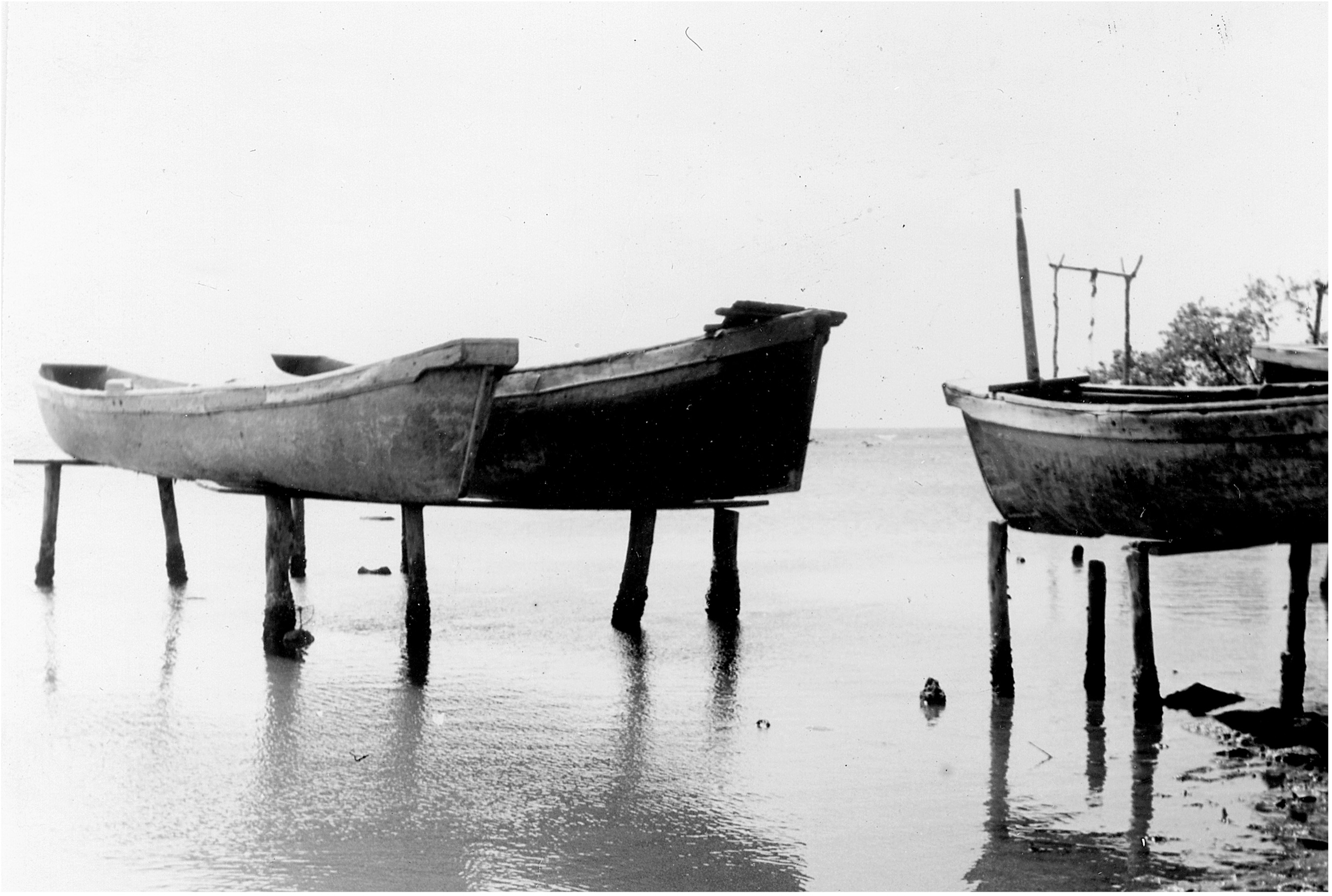
Lambros was exposed to much of this though his association with Mead and other colleagues at Columbia. He explored the implications of Mead's work at some length when he introduced a session on her films at the 1982 Margaret Mead Film Festival. On that occasion he confessed that he never saw himself as an ethnographic filmmaker or as a descendant of Mead in terms of visual theory (Comitas 1982). However, from his early fieldwork in Barbados and Jamaica among fishing communities, he developed a technical and artistic mastery of still photography. Over a period of more than five decades, Lambros produced an extensive audiovisual record in photography and video in eight countries where he conducted ethnographic research. These included Jamaica (1955, 1958–59, 1968–69, 1979), Bolivia (1967–73), Barbados (1955), Dominican Republic (1970s), Spain (1972), Greece, Georgia in the USSR, Andorra and Canada. Suffice it to note that Lambros Comitas was not only technically accomplished as a photographer; he was someone who managed to collapse the cultural distance between himself and his subjects thus making his photography more than simply a record. His photography captured the relationship between himself and his subjects.
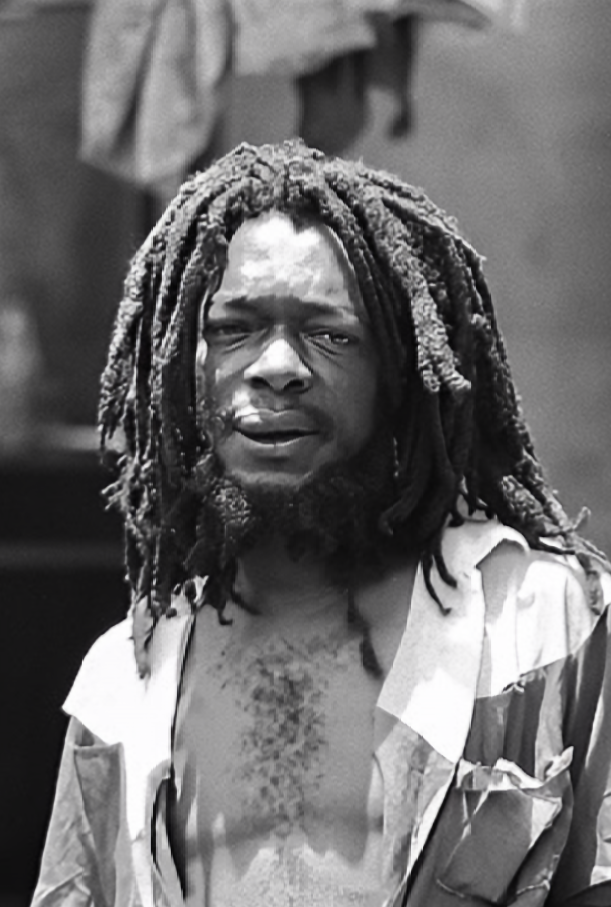
By the time that Lambros first picked up a video camera, it is fair to say that he already had a well-developed ‘ethnographic eye’ that enabled him to recognize meaningful patterns of cultural expression and interaction. Not surprisingly, his first venture with a videocam in Jamaica captured the sensibilities of “whole events” among members of the Rastafari community in Jamaica. This produced two “Rastafari happenings” that he called “Rastafari Rites” and “An Amharic Language Lesson.” Although he disowned the ethnographic filmmaker label, both of these would compare favorably with the ‘sequence films’ that were produced by ethnographic filmmakers like John Marshall and Timothy Asch, himself a student of Mead.
Lambros also recognized that video recordings—unlike 35mm and 16mm film which had to be developed at a lab generally outside of the field—provided the anthropologist with the opportunity to play back video for the viewing and reflexive commentary of his or her subjects. Along with Mead and Marvin Harris, Comitas supervised the dissertation of Joseph Schaeffer entitled “Video Techniques in Anthropology” (1970) exploring how video footage could be used in this manner. Overall, however, Lambros saw photography and videography as technologies that assisted in creating fulsome and accurate ethnographic field records which, in his view, lay at the heart of anthropology as a science.
In the context of contemporary visual anthropology, the many hours of videography that Lambros created over the years would generally be considered “record footage” as opposed to edited films. This is certainly the case for the video he shot in Bolivia (1969) in primary school classrooms in both indigenous and campesino communities that were at the time experiencing integration into the larger nation state. In the annals of anthropology, Lambros' moving-image archive can thus be seen as taking its place with footage shot by hundreds of anthropologists who sought to enrich their ethnographic field data with photography and audiovisual materials. This includes field data from notable Columbia and Columbia-trained anthropologists from Margaret Mead and Marvin Harris to Melville Herskovits (Suriname, Haiti, West Africa) and Zora Neale Hurston (Southern U.S., Haiti, Jamaica).
The materials in this gallery include photography and video from Jamaica (1969) and Bolivia (1969) as well as photography from those locales and Barbados in the 1950s.
The Ethnographic Record
Field Sites
The Ethnographic Record
Photography, video, and narrative from the field sites where Comitas conducted research over five decades.
Throughout his career, Comitas produced a voluminous record of ethnographic photographs taken across Barbados, Jamaica, Greece, Spain, Andorra, Bolivia, and Canada. Yet his visual materials remain much less known than his textual production — not only for the richness of the photographic register as ethnographic documentation, but especially because Comitas's photos have qualities that transcend his work as a social scientist, revealing a talented artist and a humane person with a camera.
Photographs provide information about the reality they document and about the photographer's point of view. Through Comitas's Caribbean and Bolivian pictures we see the perspective of a young anthropologist in the early moments of his career — one who paid special attention to his photographic production from the very beginning.
1 · Bolivia
2 · Jamaica
Composition
Visual Composition
Comitas's photographic style incorporates the sophisticated visual compositions of Cartier-Bresson, the tender view of everyday life found in Doisneau, and the use of counter-light characteristic of Salgado's work. A good part of the photos were taken on diapositives — an expensive alternative to regular film, but one that registered color with higher quality and intensity, giving his images from the 1950s and 60s a color quality that negatives would not achieve until decades later.
3 · Jamaica
5 · Jamaica
Rapport
Proximity and Trust
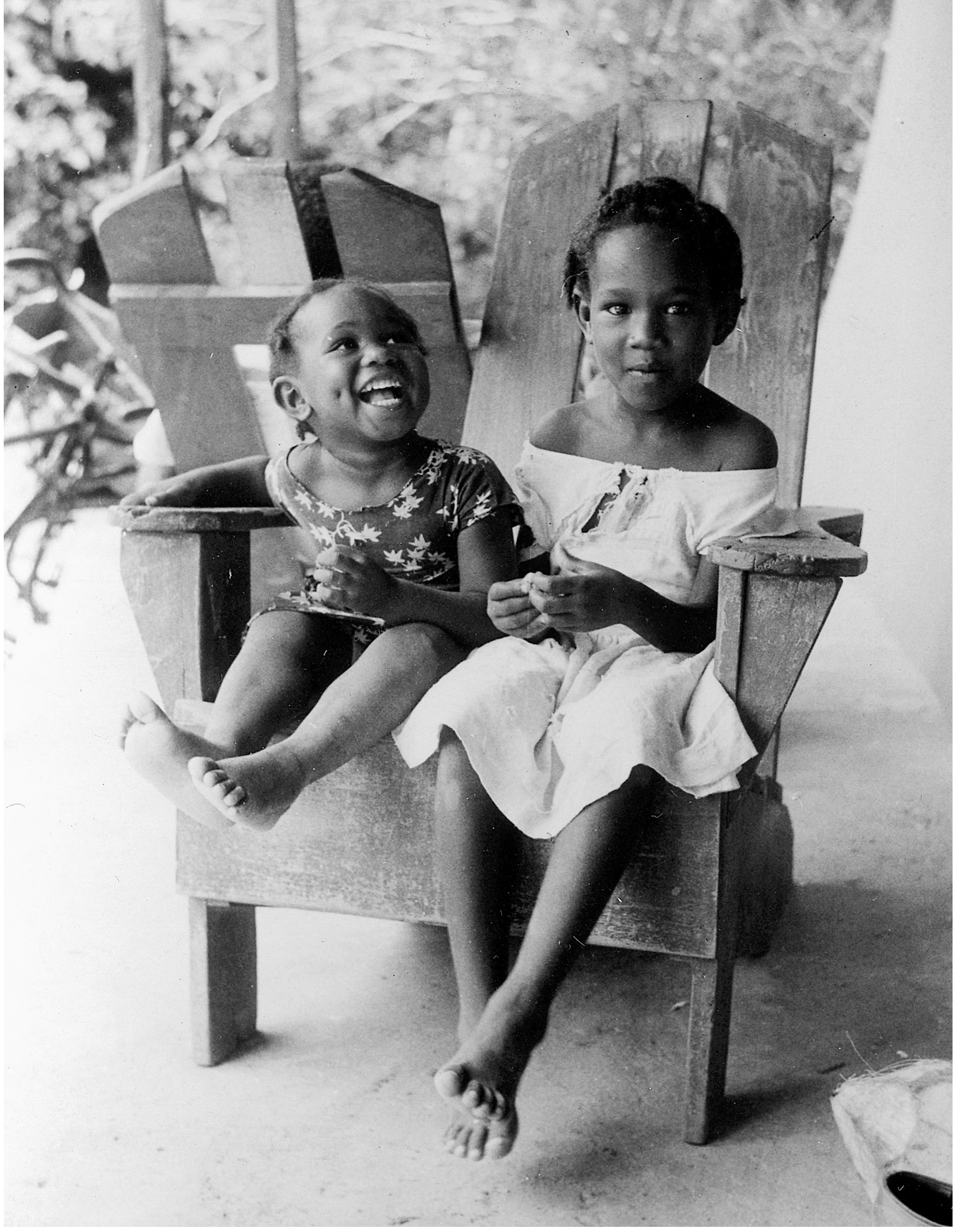
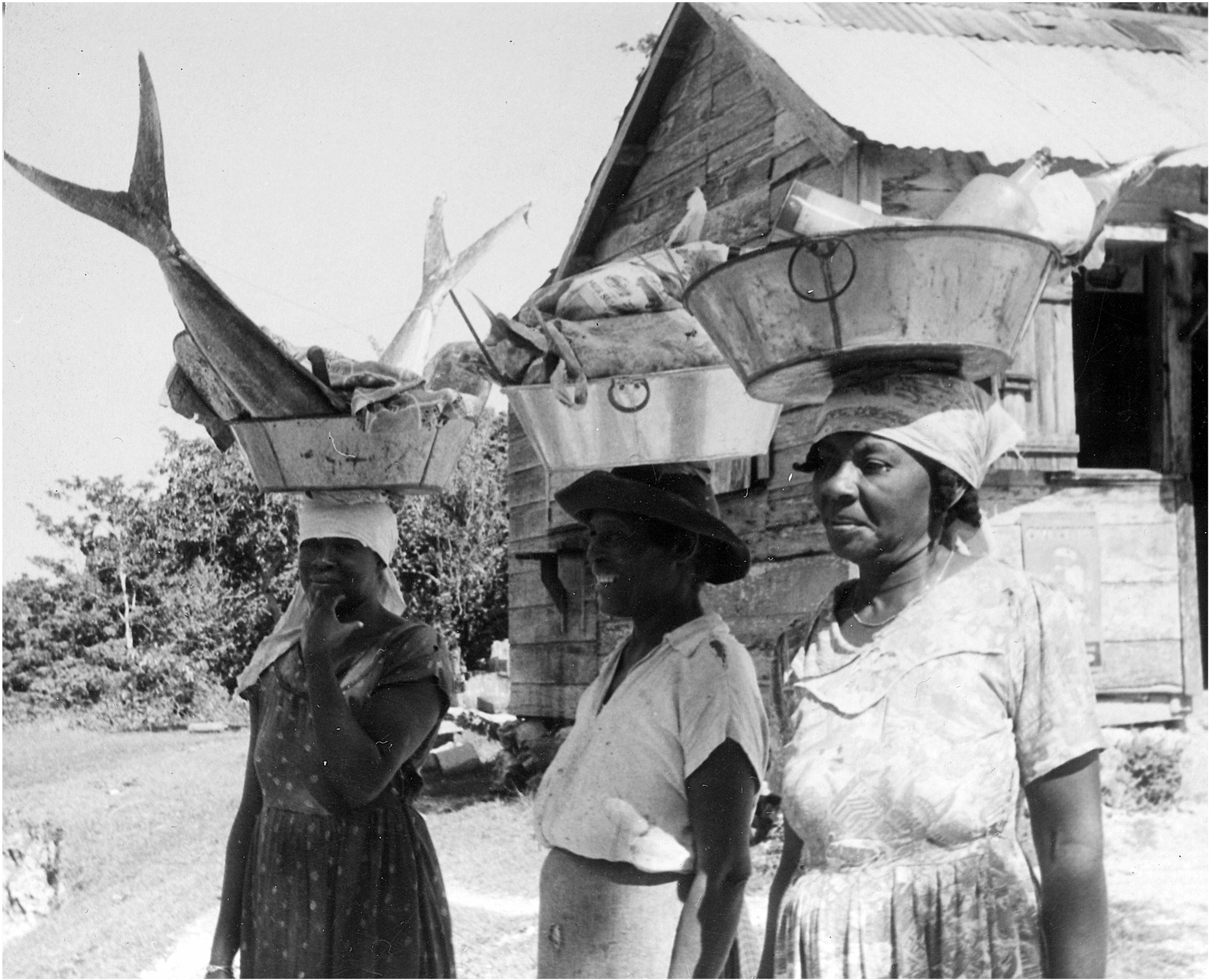
In the Caribbean photos, one thing that immediately attracts attention is the proximity between photographer and subjects — both physically and psychologically. The preference for wide-angle lenses, evidenced by the great depth of field and luminosity, implies physical closeness. Subjects often make direct eye contact with the camera. They are relaxed, casual, smiling. The laughter that breaks through the usual sobriety of documentary photography shows how well Comitas navigated the local temporalities of the communities he studied.
4 · Bolivia
7 · Jamaica
Light
Counter-Light and Depth
The use of counter-light — shooting into or alongside the light source — creates depth and luminosity that elevates the ethnographic record. Combined with the wide-angle lens and its characteristic depth of field, both background and foreground remain in sharp focus. The photographic act places objects and themes with different temporalities into the same visual horizon — what the photographer and sociologist J. S. Martins calls the "time of photography," where social relations are deconstructed and reconstructed through the photographer's point of view.
6 · Bolivia
8 · Jamaica
11 · Barbados
Temporality
Synchronized to Local Time
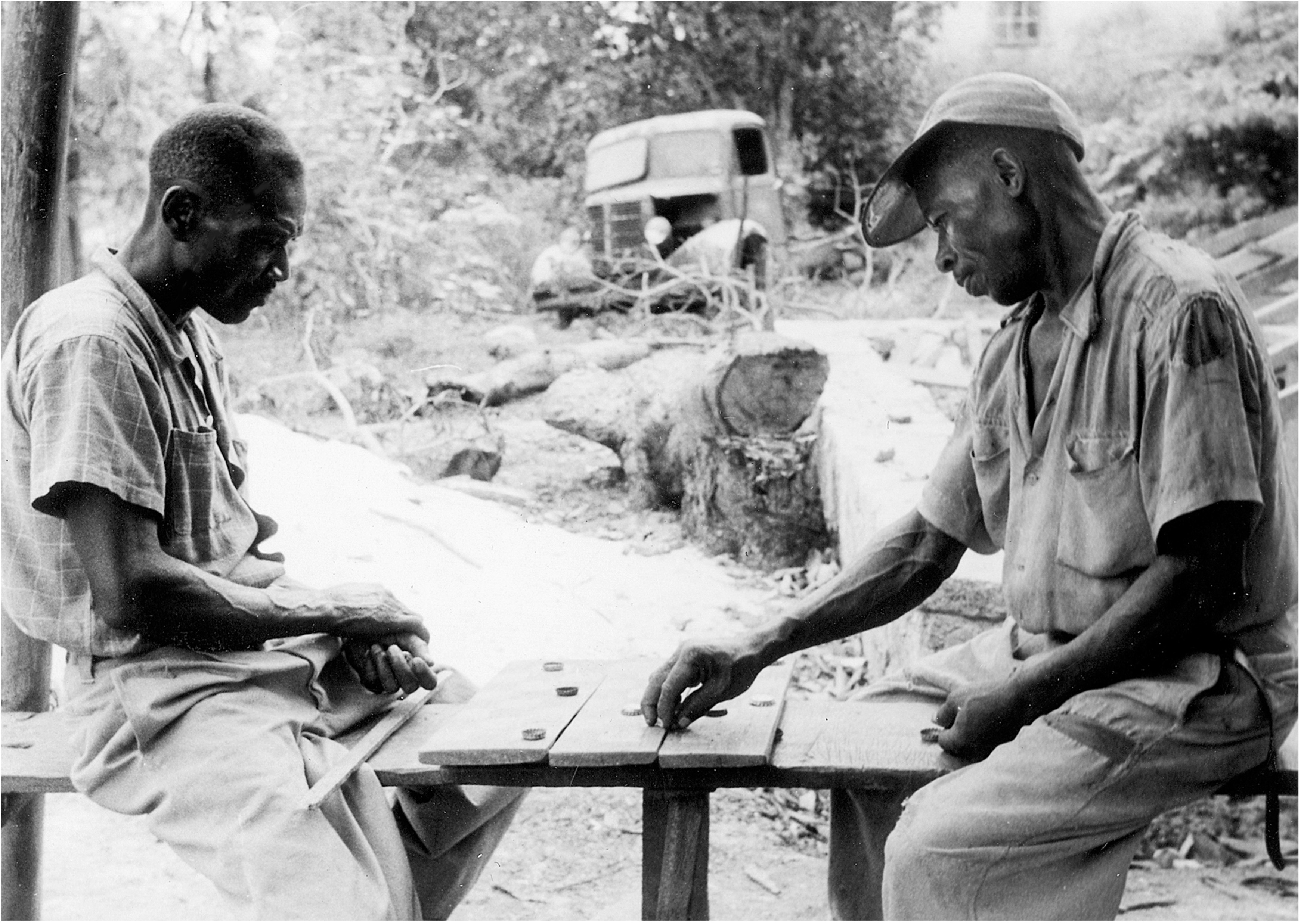
These photographs are synchronized to the times of local work life, local family rituals, local social relations. They show a lack of hurry toward reaching anthropological or sociological conclusions — a rare and valuable ethnographic virtue that has sadly become a forgotten luxury in the publish-or-perish academic world. It is said that timing is everything in comedy. Perhaps that explains why documentary photographs tend to appear so sober and serious.
9 · Bolivia
Landscape
The Monumentality of the Andes
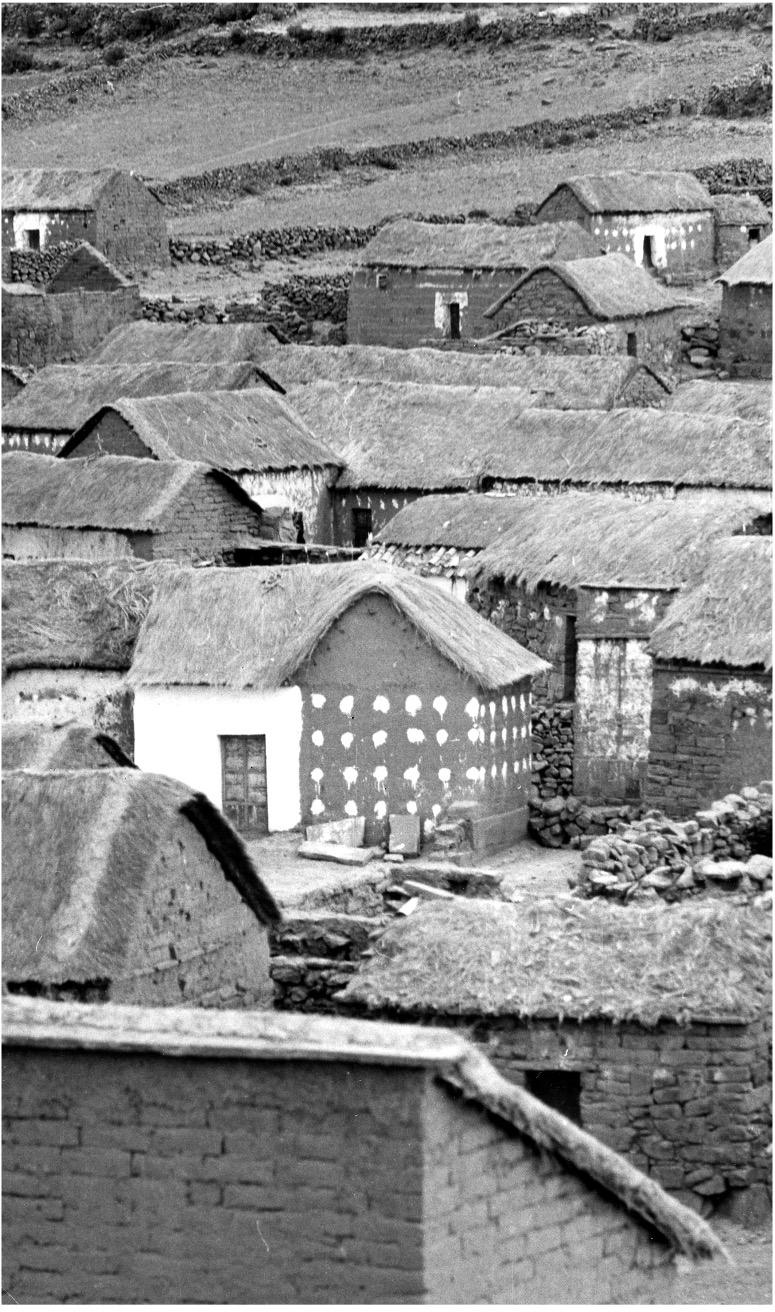
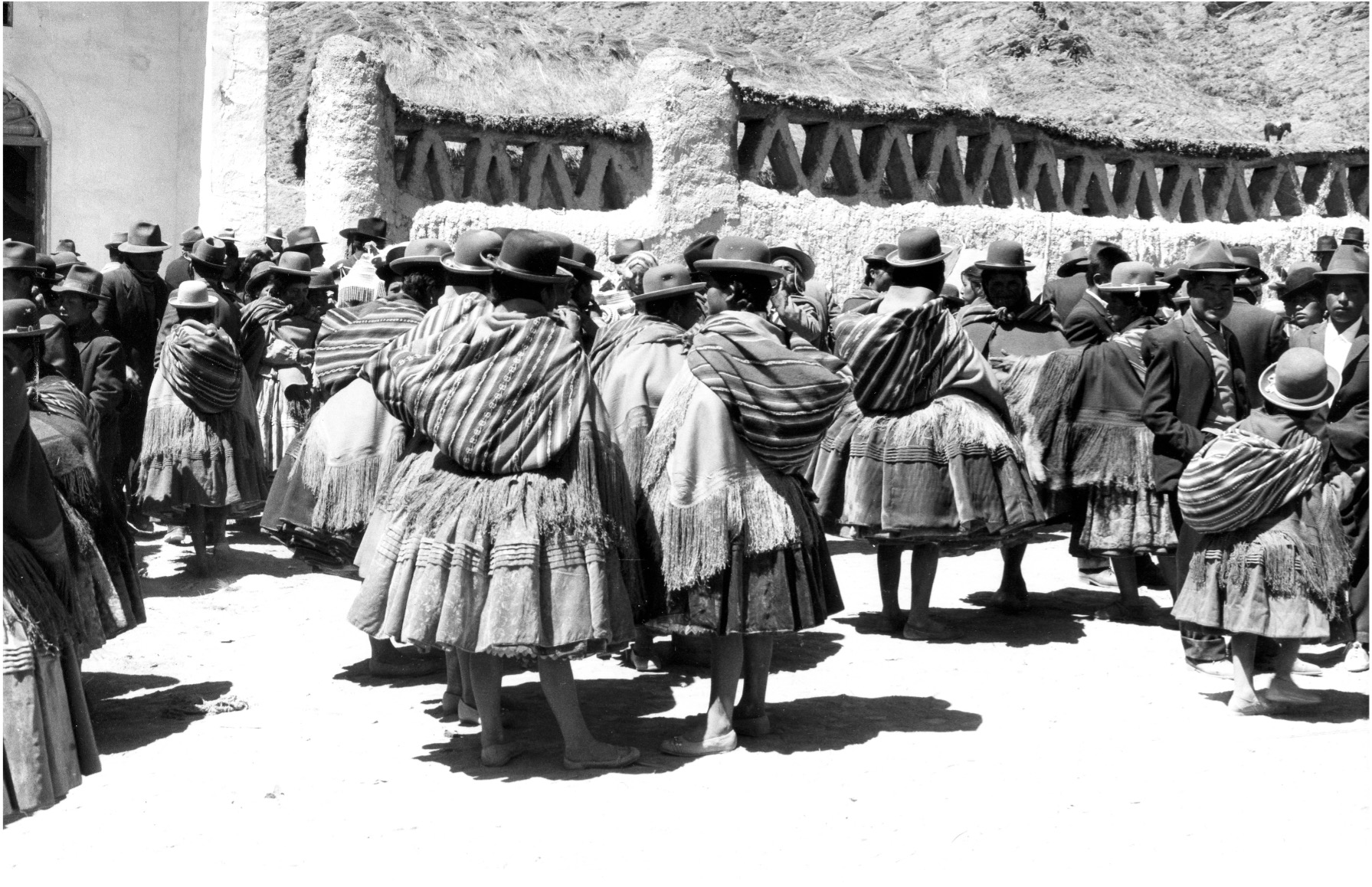
The Bolivian series shares the qualities of the Caribbean photographic production — the artistic talent and command of the technical elements. But there is something else: the impact of the Andes' natural environment. Comitas is fascinated by the landscape, the open spaces, and the way local societies interact with their surroundings. The human figure sits within the vastness of the altiplano — a composition that speaks to scale, endurance, and the entanglement of people and place.
10 · Jamaica
12 · Jamaica
The Gaze
Collapsing the Distance
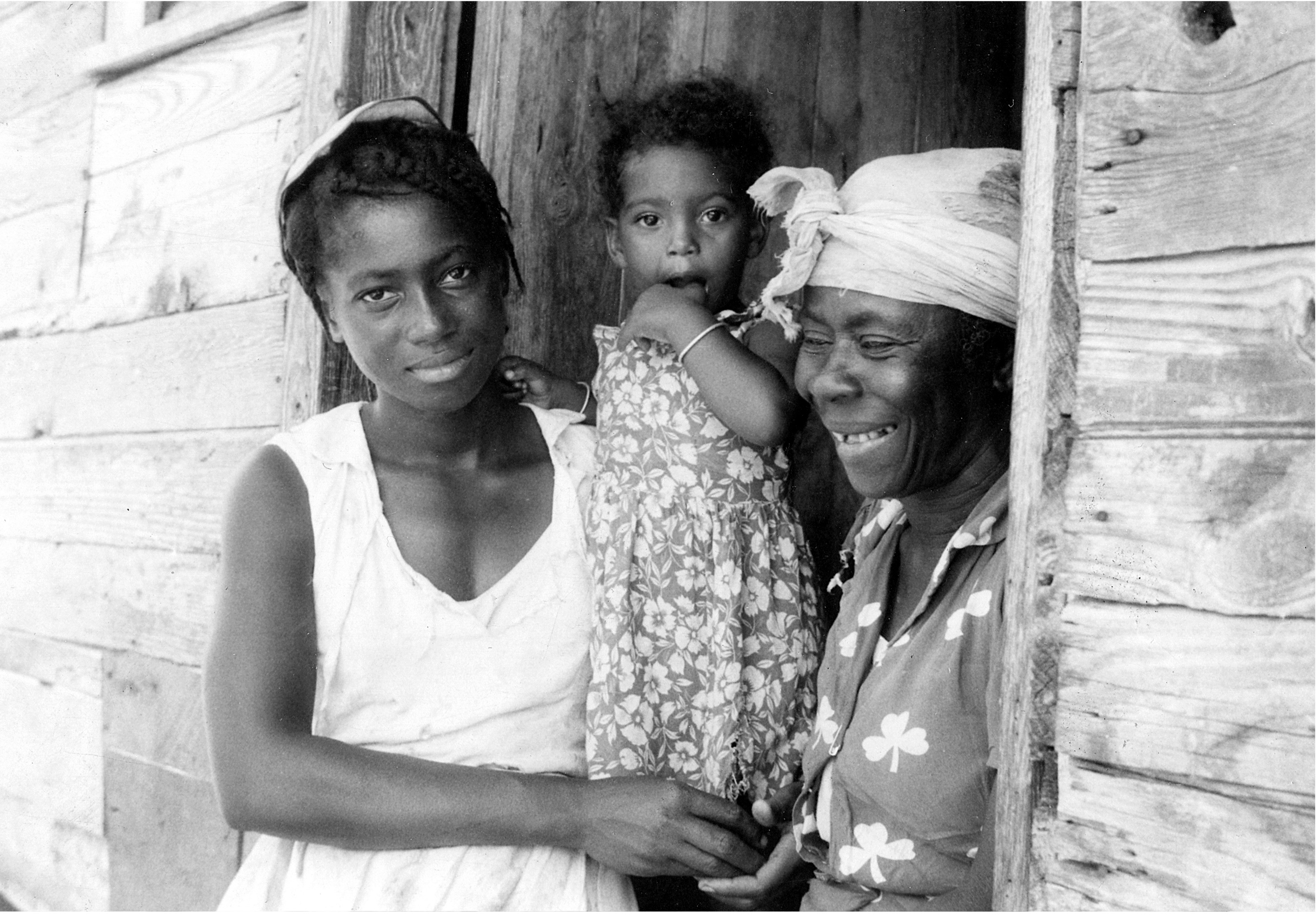
If photographs are witnesses of the physical encounter between photographer and photographed, these portraits are testimony to an extraordinary capacity for rapport. The subjects look directly into the lens — and through it, at us. For all the beauty and emotional content present in this photographic production, the images reveal almost as much about the photographer as about the photographed. Anthropological craft and poetic vision, it turns out, cannot be dissociated.
If, as said Octavio Paz, “history is knowledge situated between science proper and poetry” (Martins, Eckert, and Novaes 2005: 9), Comitas’s photographic production is a reminder that anthropological craft and poetic vision cannot be dissociated; there is no anthropology that doesn’t have a poetics. Yet Comitas’s photos take us further ahead, making us question the forms through which this is enacted in our responses to the pictures.Dr. Renzo Taddei — “From the Ethnographer’s Point of View”
Critical Essay
From the Ethnographer’s Point of View: Lambros Comitas Through His Visual Anthropology
Dr. Renzo Taddei · Field School Director, Comitas Institute · Associate Professor, Federal University of São Paulo
This article analyses the photographic production of Lambros Comitas as a way to discuss the linkages between photographic production and ethnographic experience. The foci of analysis are the building of rapport with local populations, the photographic imagination as an act of deconstruction and reconstruction of local reality, and the relationship between photographer and photographed. The text suggests that if we transcend the impetus to estheticize ethnographic photographic productions, photographic works, as Comitas presents to us, challenge us to evaluate our own capacity for rapport and for existential synchronization with the local realms we study.
In 2008, Lambros Comitas commemorated 50 years dedicated to teaching and research in anthropology. As a student at Columbia University, he had Margaret Mead and Conrad Arensberg as professors. He would eventually become their colleague, joining the faculty at Columbia in 1958, where his childhood friend, Marvin Harris, had also become a professor some years earlier. Comitas dedicated his career to the study of societies in the Mediterranean, Latin America, and the Caribbean, and to the anthropological research of drug use, education, and, lately, the anthropology of disasters.
Throughout his career, Comitas produced a voluminous record of ethnographic photographs, film footage and films taken in Barbados, Jamaica, Greece (the homeland of his parents), the former soviet republic of Georgia, Spain, Andorra, and Canada. Yet, as happens to most anthropologists, his visual materials are much less known than his textual production. This is unfortunate, not only for the richness of the photographic register in terms of ethnographic documentation, but especially for the fact that Comitas’s photos have qualities that transcend his work as a social scientist, revealing a talented artist and a humane, extraordinary person with a camera.
Comitas’s photographic style incorporates the virtues of some of the best photographers of the 20th century: the sophisticated visual compositions that we find in Cartier-Bresson, the tender view of everyday life of Doisneau, and the use of counter-light that we see in Salgado’s work.
In the Caribbean photos, one thing that immediately attracts the attention of the viewer is the proximity between photographer and subjects, both physically and psychologically. Comitas’s photos show a predilection for wide-angle lenses, as evidenced by the fact that the pictures have a great depth of field and luminosity. The use of wide-angle lenses to photograph human subjects implies physical proximity. Added to that, we can see that his subjects often make direct eye contact with the photographer and have a relaxed, casual, and smiling attitude. His Caribbean subjects were at ease with his presence. Experienced ethnographers and photographers know how much effort is required to get their subjects to display such a spontaneous and relaxed attitude.
Comitas’s attention to ordinary, everyday intimate dimensions of local life, in his photographic and textual production, demonstrates his facility for establishing rapport with local populations. It would not have produced those beautiful, intimate, yet never intrusive, scenes of family life, such as a mother breastfeeding her baby in Jamaica, in a society where the values of colonial elites attached the honor of women to their physical and emotional reclusion. Comitas’s photos provide clear evidence of the fact that the locals with whom he engaged distinguished his presence from that of the local white colonial elites.
Comitas’s photos give us evidence of his attitude towards the temporal elements of the ethnographic work: they seem to be synchronized to the times of local work life, to the times of local family rituals, to the times of local social relations. They show a lack of hurry towards reaching anthropological and sociological conclusions, a rare and valuable ethnographic virtue (that sadly has become a forgotten luxury in our publish-or-perish academic world). It is said that timing is everything in comedy. Perhaps that explains why documentary photographs tend to appear so sober and serious. The laughter that trespasses this norm in Comitas’s photography shows us how well he was able to navigate the local temporalities.
The Bolivian series of photos share the qualities of his Caribbean photographic production, especially in what concerns his artistic talent and domain of the technical elements of photography. But there is something else there, not seen in the Caribbean series: the impact of the monumentality of the Andes’ natural environment on him and on his photos. Comitas is fascinated by the landscape, the open spaces, and the way local societies interact with the local environment.
If we make the effort of transcending that impetus, we find ourselves, qua anthropologists, in the position of questioning our rapport capacity, the quality of our relationship with our interlocutors, our capacity to get in synchrony with the local temporalities we study. In that sense, Comitas’s photos are at once a visual delight and a challenge.
Bibliography
Comitas, Lambros. 1975. “The Social Nexus of Ganja in Jamaica.” In Vera Rubin (ed.), Cannabis and Culture. The Hague: Mouton.
Comitas, Lambros. 1976. “Cannabis and Work in Jamaica: A Refutation of the Amotivational Syndrome.” In Dornbush, Fink and Freedman (eds.), Chronic Cannabis Use. Annals of the New York Academy of Sciences, Vol. 283, pp. 24–32.
Comitas, Lambros and David Lowenthal, eds. 1973. Work and Family Life: West Indian Perspectives. Garden City, NY: Anchor Press/Doubleday.
Frehse, Fraya. 2005. “Antropologia do encontro e do desencontro.” In Martins, Eckert, and Novaes (orgs.) O imaginário e o poético nas Ciências Sociais. Bauru, SP: Edusc.
Goffman, Erving. 1967. “The Nature of Deference and Demeanor.” In Interactional Ritual. Garden City: Anchor Books.
Lévi-Strauss, Claude. 1961. A World on the Wane (Tristes tropiques). New York: Criterion Books.
Lévi-Strauss, Claude. 1994. Saudades do Brasil. Paris: Plon.
Martins, José de Souza. 2002. “A imagem incomum: a fotografia dos atos de fé no Brasil.” Estudos Avançados, v. 16, n. 45.
Rubin, Vera, and Comitas, Lambros. 1976. Ganja in Jamaica: The Effects of Marijuana Use. Garden City, NY: Anchor Press/Doubleday.
Rubin, Vera, and Comitas, Lambros. 1983. “Cannabis, Society, and Culture.” In Kelleher, MacMurray, and Shapiro (eds.) Drugs and Society: A Critical Reader. Kendall/Hunt Publishing.
Taylor, Lucien. 1994. Foreword. In Taylor (ed.), Visualizing Theory – Selected Essays From V.A.R. 1990–1994. New York and London: Routledge.
Paper presented at the American Anthropological Association annual meetings, November 28, 2007, Washington D.C. The author thanks Kenny Broad for comments on an earlier version of the text.
✕
✕
“All These Ithacas: Celebrating Lambros Comitas” · 90th Birthday Tribute